This talk will focus on the arc from using longitudinal clinical data to generate real-world evidence, through predictive and generative AI, to agentic systems capable of acting across electronic health records, payer portals, and other operational infrastructure.
Cornell Unplugged is a week-long campus wide initiative hosted by the Sustainable Computing Workgroup that encourages students, faculty and staff to reflect on how much time they spend connected to technology.
CALS Innovation Day 2026 highlights the people, partnerships, and investment pathways that turn research into impact. Join us for inspiring faculty stories, discussions with corporate and philanthropic leaders, and showcases of emerging discoveries and ventures that demonstrate how CALS faculty advances commercialization, strengthens industry engagement, and supports faculty and student entrepreneurship.
Hosted by the CALS Research and Innovation Office (RIO), this annual, college-wide event supports the CALS Roadmap to 2050 strategic objective to transcend conventional boundaries with college-wide, transdisciplinary research and innovation programming.
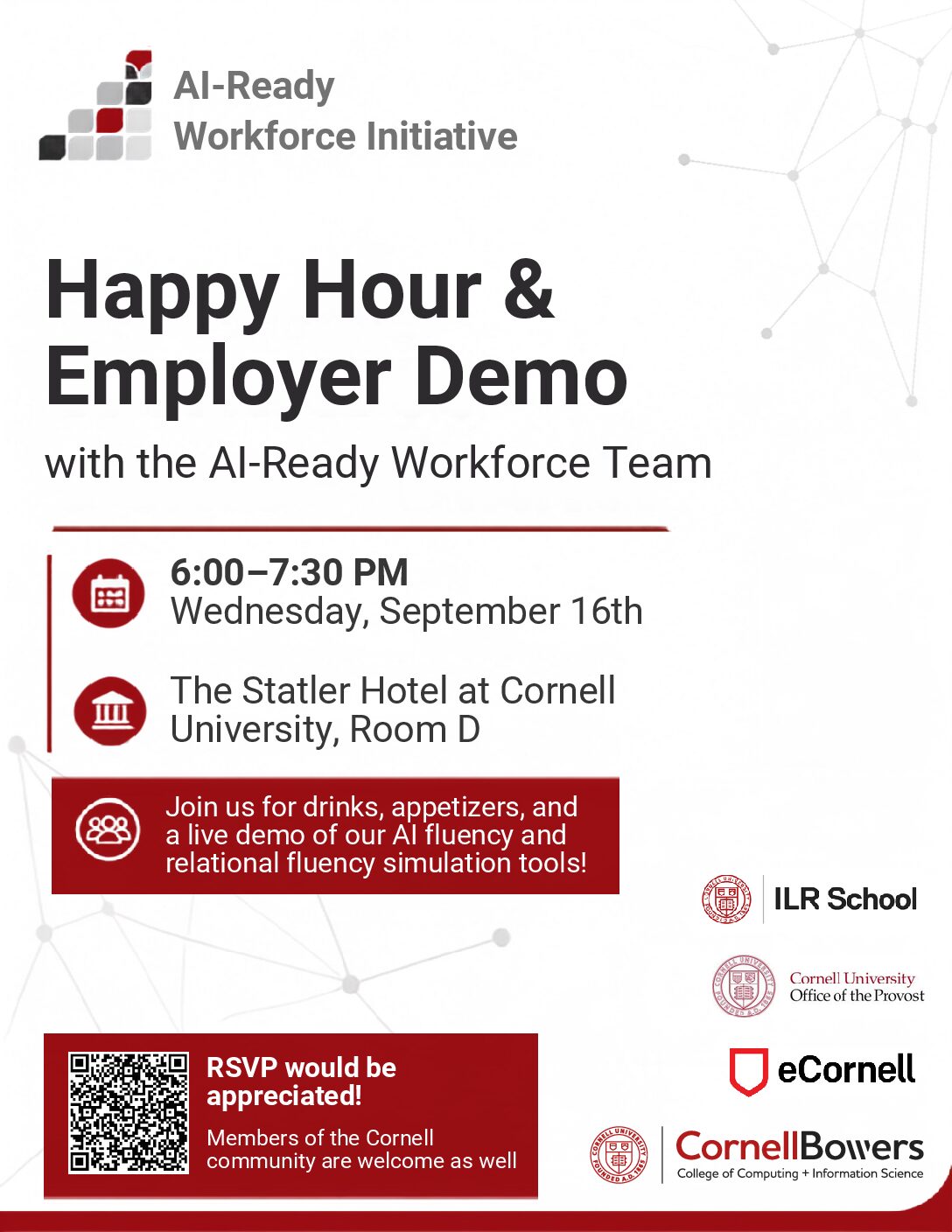
Happy Hour & Employer Demo with the AI-Ready Workforce Team. Join us for drinks, appetizers, and a live demo of our AI fluency and relational fluency simulation tools!
Cornell's AI & The Future of Work Summit will take place Thursday, September 17, 2026, from 9:00am – 11:45am in the Memorial Room of Willard Straight Hall. Hosted by the Cornell AI Initiative and University Career Development, the summit brings together employer partners, faculty, and campus AI leaders for a morning of dialogue on hiring and the world of work — and how Cornell is preparing students to thrive in an AI-ready workforce. With 170+ employers already on campus for Cornell Career Fair Days, it's a timely opportunity for faculty to hear directly from industry and to share how Cornell […]
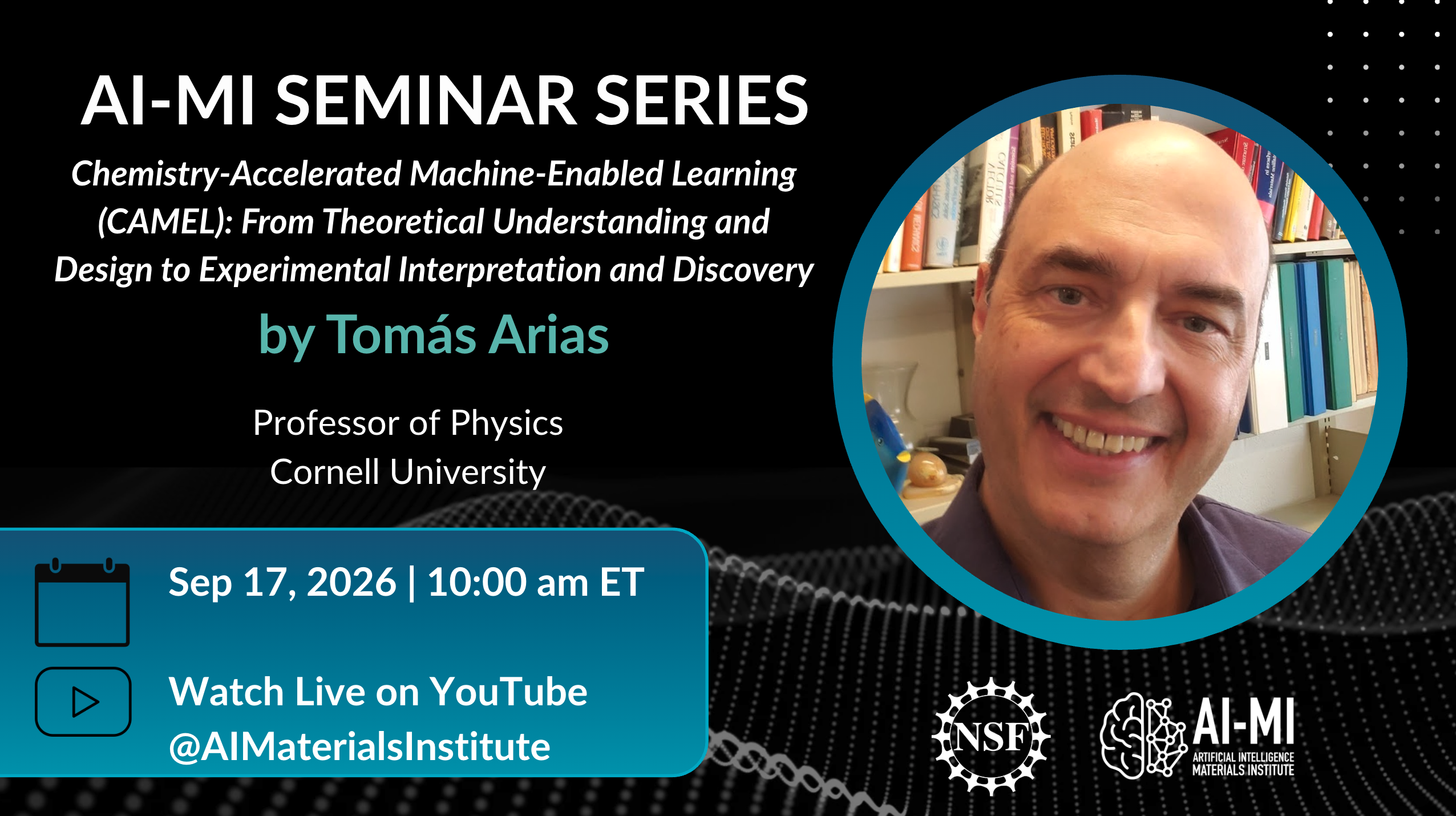
Machine learning is transforming materials discovery, but its greatest impact may come not from applying general-purpose AI to materials data, but from constructing learning methods that embody chemical and materials-physics knowledge. I will illustrate this through interpretable representations; differentiable design using Effective Atom Theory (EAT), differentiable Equiformer fast EAT (DEFEAT), and hereditary EAT (HEAT); Bayesian interpretation of experiments; and closed theory–experiment loops. Demonstrated applications span superconductors, photovoltaics, clean-energy catalysts, ptychography, and superconducting qubits.
Cornell researchers return to New York City for Climate Week NYC 2026 from September 20-27, joining global leaders to advance bold, science-based solutions to pressing sustainability challenges.
CIDA seminar with Kuan Fang
Physically Grounded Robot Learning for Open-World Dexterous Manipulation
Kuan Fang, Assistant Professor, Computer Science, Cornell Bowers College of Computing and Information Science
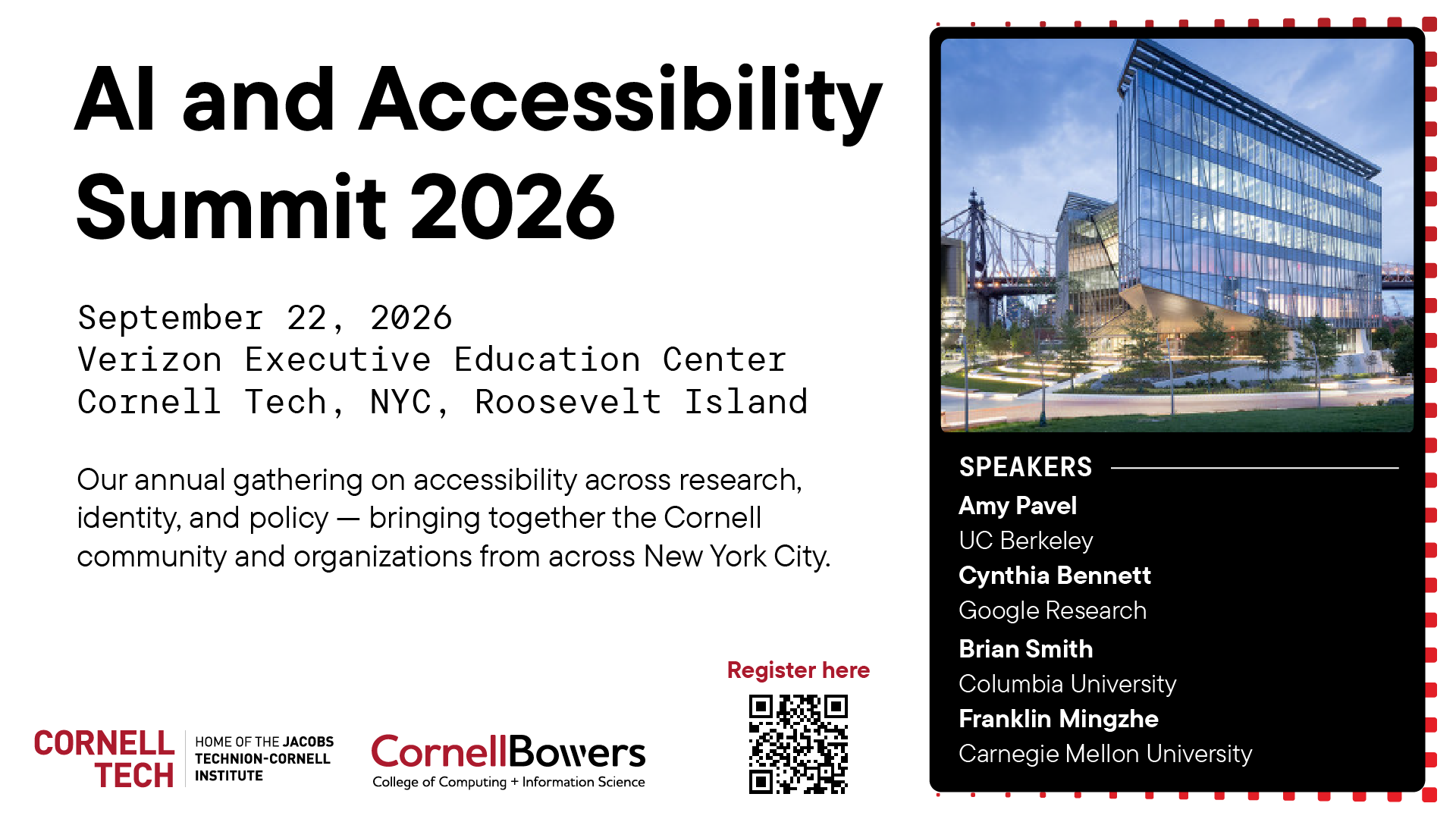
The AI and Accessibility Summit is CATAI's annual conference on accessibility — spanning research, identity, and policy. The goal is to bring together voices from within Cornell University (faculty, staff, students, and alumni) and to build lasting connections with organizations in and around New York City. The 2026 edition takes place on September 22 and 23, 2026 and runs over two full days. Day 1 is fully in person and open to everyone who registers, with keynotes, talks, panel conversations, and hands-on demos. Day 2 is a smaller, invite-only day built around case study discussions, alongside a handful of talks — a chance to […]
Aishwarya Agrawal is an Assistant Professor in the Department of Computer Science and Operations Research at the University of Montreal. She is a Canada CIFAR AI Chair and a core academic member of Mila -- Quebec AI Institute, and spends one day a week as a Research Scientist at Google Research.
This CAHRScast session will explore how AI is being used in talent acquisition and employee mobility, including emerging applications, decision points, and implications for organizations and employees.
The capabilities of AI has dramatically increased over the past year. This session will provide a space to discuss innovative ways researchers across departments are integrating AI into their statistical workflows, as well as a space to discuss concerns about the best ways to maintain the scientific rigor and reproducibility in the process.
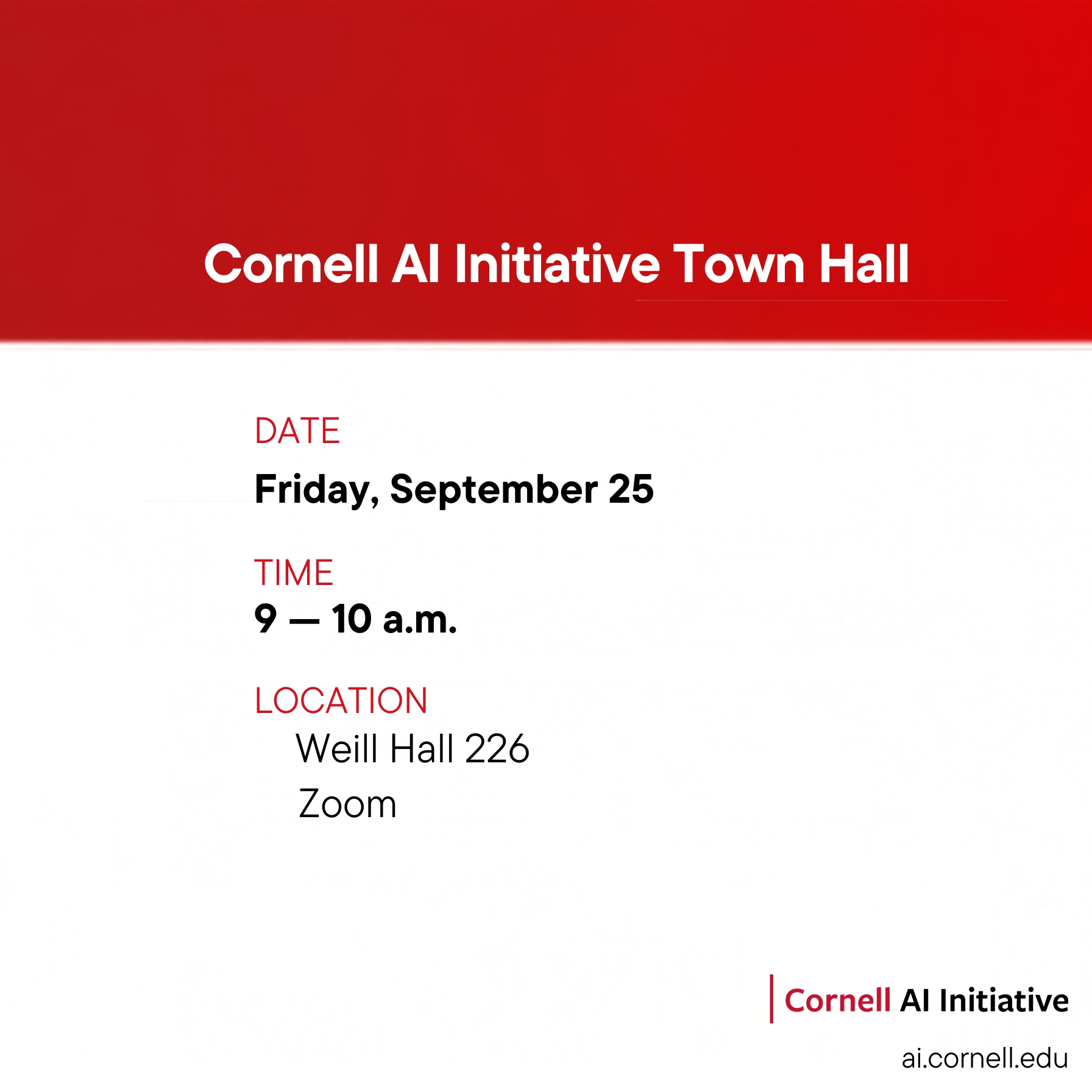
Faculty and staff are invited to a town hall on Friday, September 25, from 9 to 10 a.m. to learn more about the Cornell AI Initiative and help shape its future. The session will provide updates on programs designed to address the opportunities and challenges of AI across research, education, operations, and engagement. Leadership will also share the initiative’s strategy, discuss plans to expand access to AI tools, and seek feedback on a draft mission statement.
Learn how artificial intelligence is reshaping the American workforce at an upcoming briefing sponsored by Cornell University and the R Street Institute. Artificial intelligence is transforming how Americans work — automating routine tasks, creating new categories of jobs, and demanding new skills across nearly every sector of the economy. From manufacturing to farming to government agencies, AI adoption is accelerating faster than traditional training and educational systems are capable of preparing current and future workers. Understanding AI's impact — analyzed by researchers, employers, and policymakers nationwide — is essential to ensuring American workers can adapt to the jobs of the […]