
Latest stories, updates, and announcements that highlight the people, research, and progress of AI throughout Cornell.
Want your news listed here? Email us.
AI Headlines from Around the University

Via:
$10.5 million gift to Cornell will fund research using Empire AI
March 5, 2025
A five-year, $10.5 million gift from philanthropist Tom Secunda, co-founder of Bloomberg L.P., will help fund artificial intelligence-related research at Cornell Tech in New York City and at the Cornell Ann S. Bowers College of Computing and Information Science in Ithaca.

Via:
AI models makes precise copies of cuneiform characters
March 4, 2025
Deciphering some people’s writing can be a major challenge – especially when that writing is cuneiform characters imprinted into 3,000-year-old tablets. Now, Middle East scholars can use artificial intelligence (AI) to identify and copy over cuneiform characters from photos of tablets, letting them read complicated scripts with ease.

Via:
Samsara co-founder named Cornell Entrepreneur of the Year
March 3, 2025
Entrepreneurship at Cornell has announced that John Bicket ’02, chief technology officer and co-founder of tech firm Samsara, has been named Cornell Entrepreneur of the Year 2025. Samsara offers an AI-powered platform to help physical operations organizations improve their safety, efficiency and sustainability by using data from sensors and connected devices.
Via:
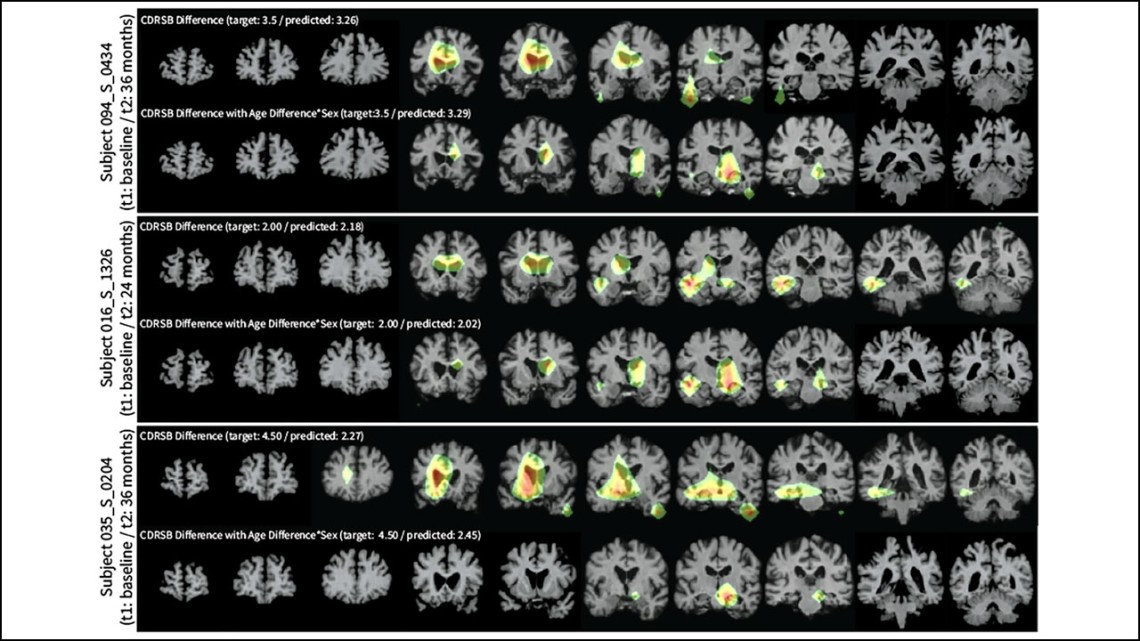
AI system can analyze serial medical images
February 28, 2025
A new AI-based system for analyzing images taken over time can accurately detect changes and predict outcomes, according to a study led by investigators at Weill Cornell Medicine, Cornell’s Ithaca campus and Cornell Tech. The system’s sensitivity and flexibility could make it useful across a wide range of medical and scientific applications.

Via:
UR, RIT join artificial intelligence consortium
February 25, 2025
The University of Rochester and Rochester Institute of Technology have joined the Empire AI consortium. The founding members of Empire AI include Cornell University, SUNY, CUNY, Columbia University, New York University, Rensselaer Polytechnic Institute, and the Flatiron Institute.
Via:
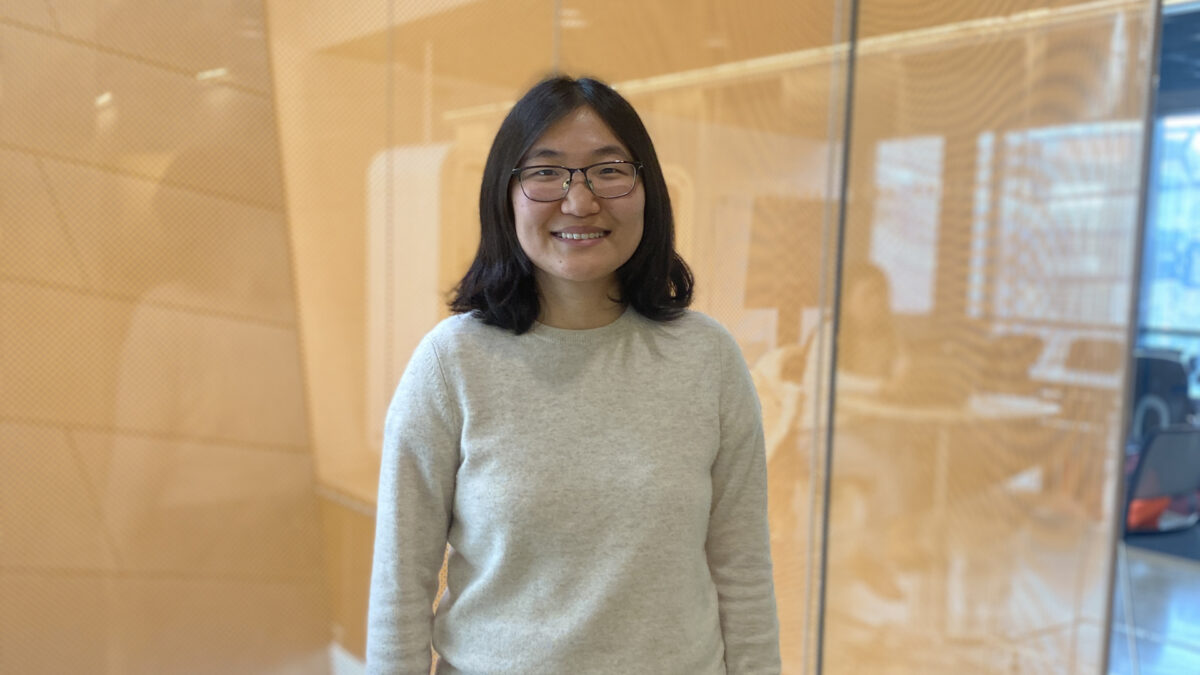
How can we use AI to improve animal welfare? A Q&A with Jennifer Sun
February 21, 2025
Through her research, Jennifer Sun wants to help human experts and AI models collaborate to unearth new insights from ever-growing stockpiles of data in diverse fields.

Via:
Transdisciplinary project aims to prevent the next pandemic
February 10, 2025
Most pandemics in the past century were sparked by a pathogen jumping from animals to humans. This moment of zoonotic spillover is the focus of a multidisciplinary team of researchers led by Raina Plowright, the Rudolf J. and Katharine L. Steffen Professor in the Cornell College of Veterinary Medicine’s Department of Public and Ecosystem Health.
Via:
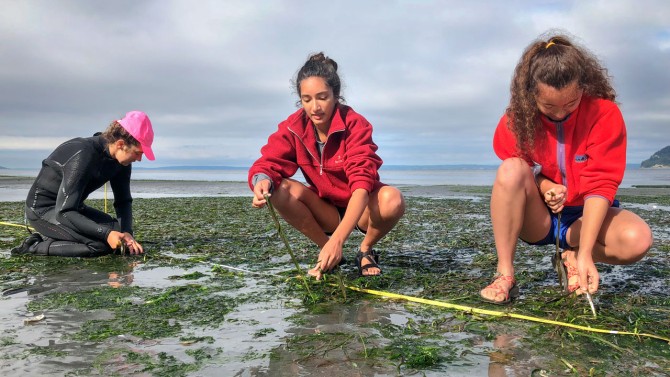
Marine herbivores chomp eelgrass, making it susceptible to wasting
February 5, 2025
In two new papers, Cornell plant-herbivore experts and researchers from the Cornell Institute for Computational Sustainability joined forces to show the significant impacts of herbivores like sea snails on the spread of seagrass wasting disease. Grazing by small herbivores was associated with a 29% increase in the prevalence of disease, which contributes to huge losses in meadow areas from San Diego to Alaska.
Via:
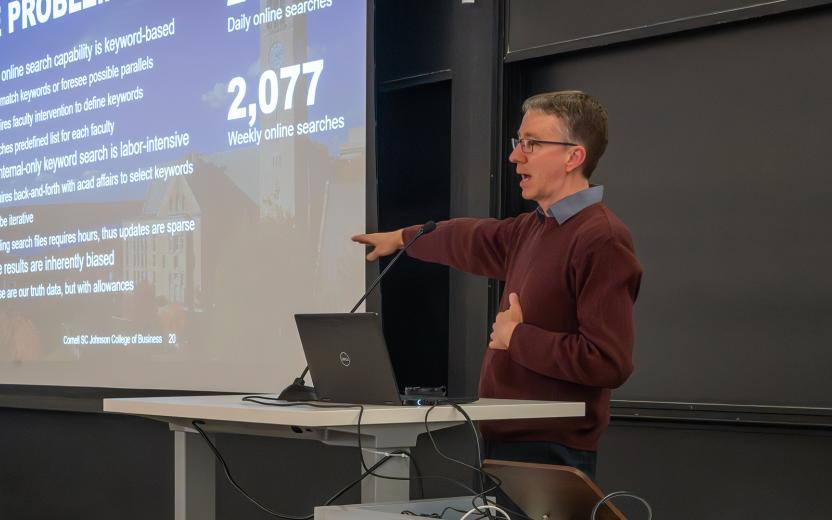
New Cornell Projects Leap Forward with Generative AI Tools
January 30, 2025
Cornell’s AI Initiative supports university faculty, staff, and students as they explore models to optimize the use of generative AI for practical purposes. Eight local teams stunned a hybrid audience with presentations proving generative AI applications could simplify and solve problems that previously required intense manual effort. Each project team was led by one or two faculty or staff members and supported by students from the Cornell Ann S. Bowers College of Computing and Information Science (Cornell Bowers CIS).