
Latest stories, updates, and announcements that highlight the people, research, and progress of AI throughout Cornell.
Want your news listed here? Email us.
AI Headlines from Around the University

Via:
AI-generated images map visual functions in the brain
November 30, 2023
Researchers have demonstrated the use of artificial-intelligence-selected natural images and AI-generated synthetic images as neuroscientific tools for probing the visual processing areas of the brain.

Via:
The OpenAI meltdown will only accelerate the artificial intelligence race
November 22, 2023
Optimists and ‘doomers’ are fighting over the direction of AI research – and those who want speed may have won this round, Sarah Kreps, the John L. Wetherill Professor of government in the College of Arts and Sciences and the Director of Tech Policy Institute in the Cornell Brooks School of Public Policy, writes in an op-ed in The Guardian.

Via:
Crowdsourced fact-checking fights misinformation in Taiwan
November 21, 2023
As journalists and professional fact-checkers struggle to keep up with the deluge of misinformation online, fact-checking sites that rely on loosely coordinated contributions from volunteers, such as Wikipedia, can help fill the gaps, Cornell research finds.

Via:
Big-data study explores social factors affecting child health
November 21, 2023
A Weill Cornell Medicine-led research team used an AI-based approach to uncover patterns among conditions in which people are born, grow, work and age, called social determinants of health, and then linked each pattern to children’s health outcomes.
Via:
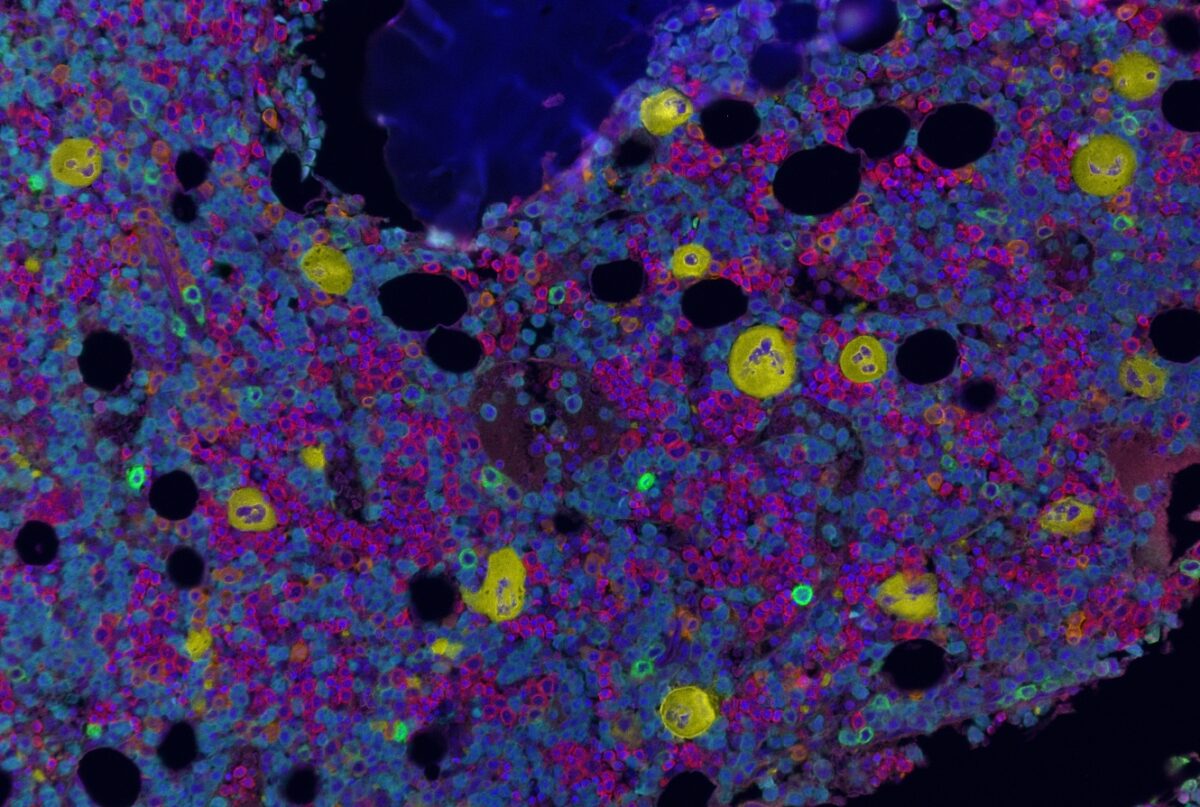
Researchers chart the contents of human bone marrow
November 16, 2023
A team at Weill Cornell Medicine has mapped the location and spatial features of blood-forming cells within human bone marrow, confirming hypotheses about the anatomy of this tissue and providing a powerful new means to study diseases that affect bone marrow.

Via:
Glasses use sonar, AI to interpret upper body poses in 3D
November 9, 2023
Throughout history, sonar’s distinctive “ping” has been used to map oceans, spot enemy submarines and find sunken ships. Today, a variation of that technology – in miniature form, developed by Cornell researchers – is proving a game-changer in wearable body-sensing technology.

Via:
Processor made for AI speeds up genome assembly
November 1, 2023
A hardware accelerator initially developed for artificial intelligence operations successfully speeds up the alignment of protein and DNA molecules, making the process up to 10 times faster than state-of-the-art methods.

Via:
$4.2M grant funds Cornell AES work to better lives in NYS
October 23, 2023
Cornell AES administers annual federal funding that supports research to improve lives and livelihoods in New York state.

Via:
Doellgast research offers insight into AI protections for workers
October 5, 2023
Taking lessons from Germany and Norway, Professor Virginia Doellgast demonstrates how different tactics can be used to protect workers from algorithmic management and AI technology abuses.