
Latest stories, updates, and announcements that highlight the people, research, and progress of AI throughout Cornell.
Want your news listed here? Email us.
AI Headlines from Around the University

Via:
Cornell EMPIRE AI Weekly Forum
September 24, 2024
Oct 11, 2024 4 p.m. Registration for the series is required, which will then provide the Zoom link info Happening every Friday from 4-4:30 PM via Zoom, the forum is for Cornell faculty and staff (e.g., research operational support staff) who are interested in the EMPIRE AI’s current status and future plans.
Via:
Cornell EMPIRE AI Weekly Forum
September 24, 2024
Friday, September, 27; 4-4:30 p.m. ET Registration for the series is required, which will then provide the Zoom link info Happening every Friday from 4-4:30 PM via Zoom, the forum is for Cornell faculty and staff (e.g., research operational support staff) who are interested in the EMPIRE AI’s current status and future plans.

Via:
NSF grant supports AI-driven sustainability research, training
September 24, 2024
A new program at Cornell will tackle critical environmental challenges by integrating advanced artificial intelligence (AI) tools with sustainability research across the campus, thanks to a grant from the National Science Foundation’s Research Traineeship Program.

Via:
Reducing the cultural bias of AI with one sentence
September 17, 2024
“Cultural prompting” – asking an AI model to perform a task like someone from another part of the world – resulted in reduced bias in responses for the vast majority of the more than 100 countries tested by a Cornell-led research group.

Via:
Mixing Physical, Virtual Worlds to Drive Home Climate Urgency
September 11, 2024
The Communal eXtended-Reality (CXR) system is a cutting-edge blend of the physical and digital worlds in which virtual scenes are overlaid onto the real world, designed to engage communities in new ways.

Via:
Brevity is money when using AI for data analysis
September 9, 2024
A new computational system called Schemonic, developed by Cornell researchers, cuts the costs of using large language models such as ChatGPT and Google Bard by combing large datasets and generating what amounts to “CliffsNotes” versions of data

Via:
Diagnostic tool identifies puzzling inflammatory diseases in kids
September 9, 2024
A Cornell-led collaboration developed machine-learning models that use these cell-free molecular RNA dregs to diagnose pediatric inflammatory conditions that are difficult to differentiate. The diagnostic tool can accurately determine if a patient has Kawasaki disease (KD), Multisystem Inflammatory Syndrome in Children (MIS-C), a viral infection or a bacterial infection, while simultaneously monitoring the patient’s organ health.

Via:
AI boosts indoor food production’s energy sustainability
September 9, 2024
Integrating artificial intelligence into today’s environmental control systems could reduce energy consumption for indoor agriculture by 25% – potentially helping to feed the world as its population rises, Cornell engineers have found.
Via:
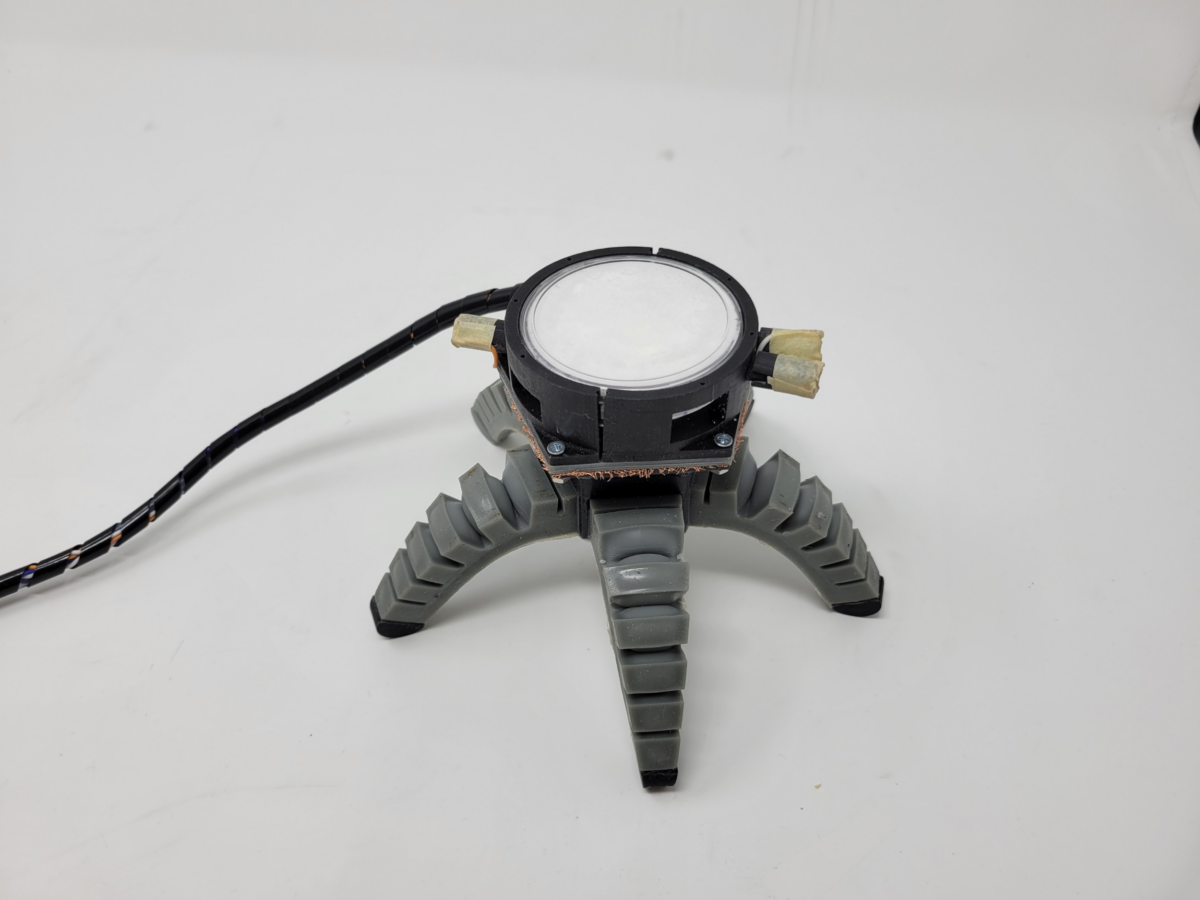
Biohybrid robots controlled by electrical impulses — in mushrooms
August 30, 2024
Cornell researchers discovered a new way of controlling biohybrid robots that can react to their environment better than their purely synthetic counterparts: harnessing fungal mycelia’s innate electrical signals.