
Latest stories, updates, and announcements that highlight the people, research, and progress of AI throughout Cornell.
Want your news listed here? Email us.
AI Headlines from Around the University

Via:
10 researchers named inaugural Eric and Wendy Schmidt AI in Science Postdoctoral Fellows
March 21, 2023
Ten Cornell postdoctoral researchers who plan to harness the power of artificial intelligence (AI) in areas like materials discovery, physics, biological sciences and sustainability sciences have been named Eric and Wendy Schmidt AI in Science Postdoctoral Fellows, a Schmidt Futures program.

Via:
Regret being hostile online? AI tool guides users away from vitriol
February 14, 2023
To help identify when tense online debates are inching toward irredeemable meltdown, Cornell researchers have developed an artificial intelligence tool that can track these conversations in real-time, detect when tensions are escalating and nudge users away from using incendiary language.

Via:
Newly released open-source platform cuts costs for running AI
February 7, 2023
Cornell researchers have released a new open-source platform, Cascade, that can run artificial intelligence models in a way that slashes expenses and energy costs while dramatically improving performance.

Via:
Bot gives nonnative speakers the floor in videoconferencing
January 31, 2023
Native speakers often dominate the discussion in multilingual online meetings, but adding an automated participant that periodically interrupts the conversation can help nonnative speakers get a word in edgewise, according to new research at Cornell.
Via:
AI improves detail, estimate of urban air pollution
January 12, 2023
Using artificial intelligence, Cornell engineers have simplified models that accurately gauge the fine particulate matter in urban air pollution – exhaust from cars and trucks that get into human lungs.

Via:
Do trucks mean Trump? AI shows how humans misjudge images
September 20, 2022
A study of common mistakes humans made while guessing whether a neighborhood voted for Joe Biden or Donald Trump based on a single Google Street View image may help us make better decisions about visual information.
Via:
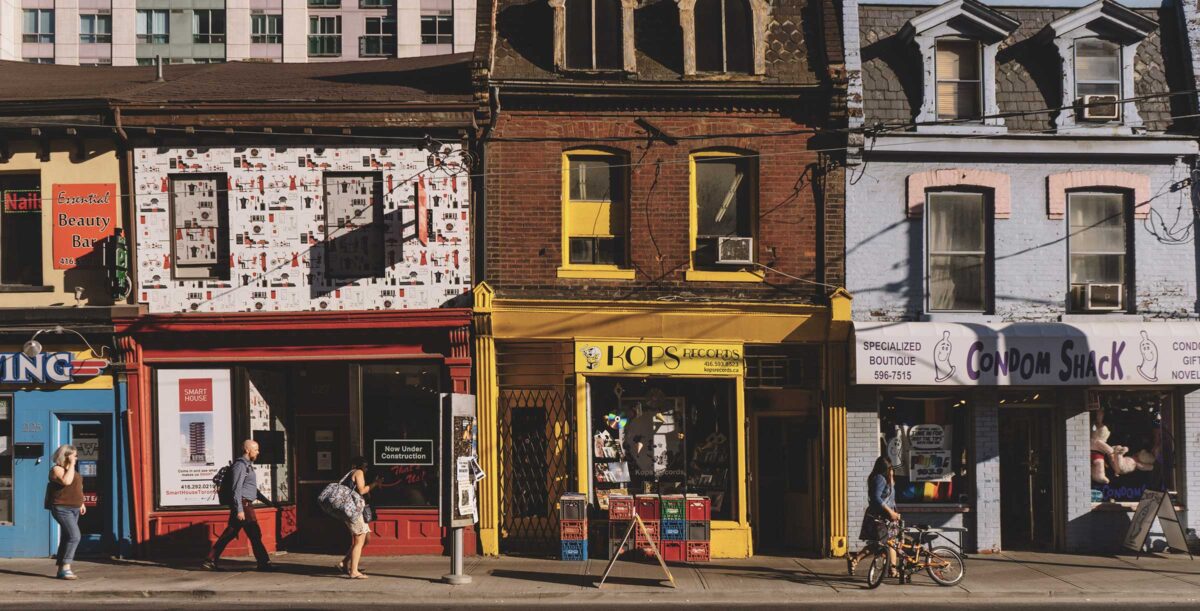
Fairer ranking system diversifies search results
September 19, 2022
Cornell researchers have developed a fairer system for recommendations – from hotels to jobs to videos – so a few top hits don’t get all the exposure.

Via:
Protecting privacy – and safety – in encrypted messaging
September 12, 2022
Cornell Tech researchers have developed a mechanism for preserving anonymity in encrypted messaging – which conceals message content but might not cloak the sender’s identity – while simultaneously blocking unwanted or abusive messages.

Via:
Cornell Bowers CIS welcomes 6 new faculty
August 30, 2022
The faculty have expertise in a broad range of areas, including robotics, artificial intelligence, digital fabrication, public health, and population genetics.