
Latest stories, updates, and announcements that highlight the people, research, and progress of AI throughout Cornell.
Want your news listed here? Email us.
AI Headlines from Around the University

Via:
Transdisciplinary project aims to prevent the next pandemic
February 10, 2025
Most pandemics in the past century were sparked by a pathogen jumping from animals to humans. This moment of zoonotic spillover is the focus of a multidisciplinary team of researchers led by Raina Plowright, the Rudolf J. and Katharine L. Steffen Professor in the Cornell College of Veterinary Medicine’s Department of Public and Ecosystem Health.
Via:
Marine herbivores chomp eelgrass, making it susceptible to wasting
February 5, 2025
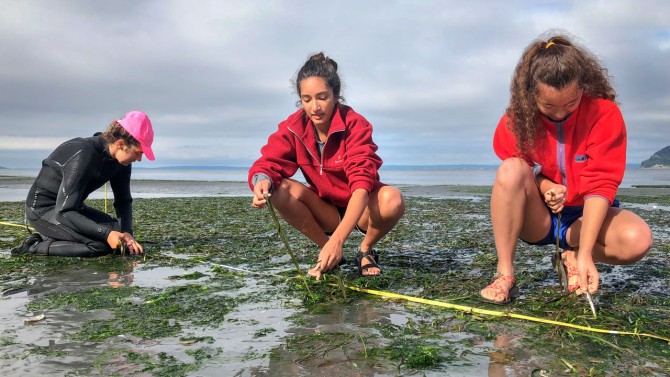
In two new papers, Cornell plant-herbivore experts and researchers from the Cornell Institute for Computational Sustainability joined forces to show the significant impacts of herbivores like sea snails on the spread of seagrass wasting disease. Grazing by small herbivores was associated with a 29% increase in the prevalence of disease, which contributes to huge losses in meadow areas from San Diego to Alaska.
Via:
New Cornell Projects Leap Forward with Generative AI Tools
January 30, 2025
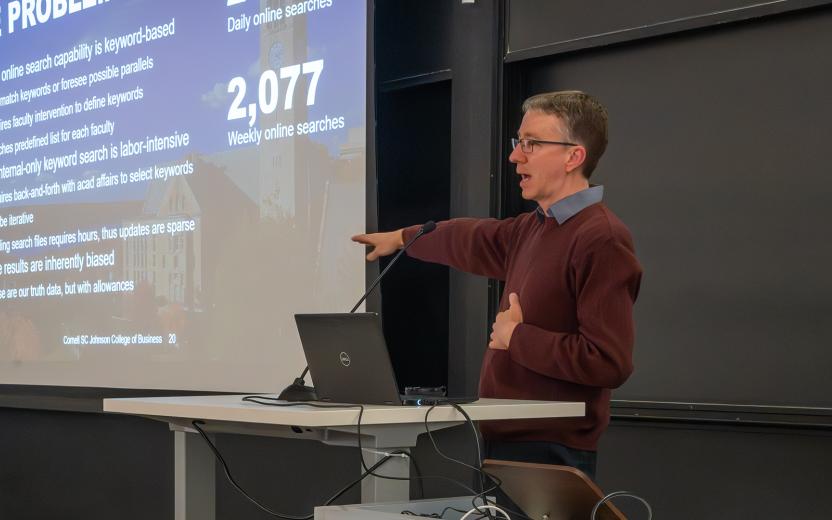
Cornell’s AI Initiative supports university faculty, staff, and students as they explore models to optimize the use of generative AI for practical purposes. Eight local teams stunned a hybrid audience with presentations proving generative AI applications could simplify and solve problems that previously required intense manual effort. Each project team was led by one or two faculty or staff members and supported by students from the Cornell Ann S. Bowers College of Computing and Information Science (Cornell Bowers CIS).
Via:
AI Innovation Lab Demo Day Features University Projects
January 30, 2025
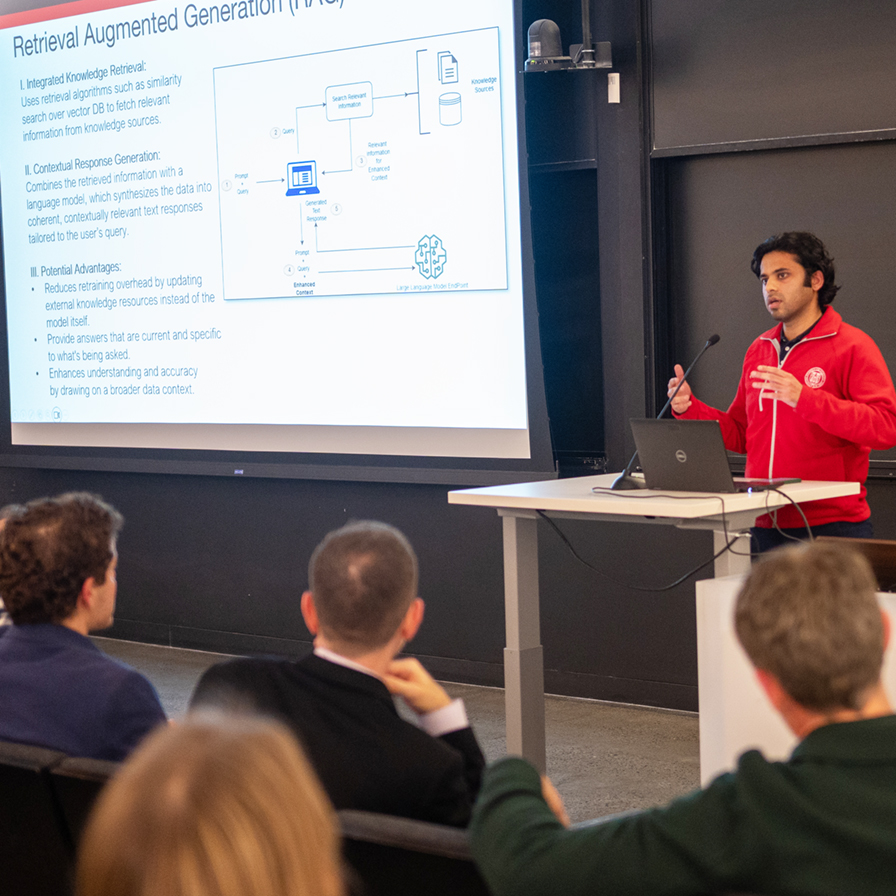
After brief opening remarks by Chief Global Information Officer (CIO) Curt Cole and by CIO for Cornell’s Ithaca campus and Cornell Tech Ben Maddox, eight projects from the Fall 2025 cohort of the university’s AI Innovation Lab were presented to in-person and Zoom audience members. Among the participants gathered in Bill and Melinda Gates Hall were three co-chairs of the Generative AI Plenary Council at Cornell: Vice Provost for Academic Innovation Steve Jackson, Vice President for Research and Innovation Krystyn Van Vliet, and Provost Kavita Bala.
Via:
Cornell team wins $50K in AI puzzle-solving challenge contest
January 23, 2025
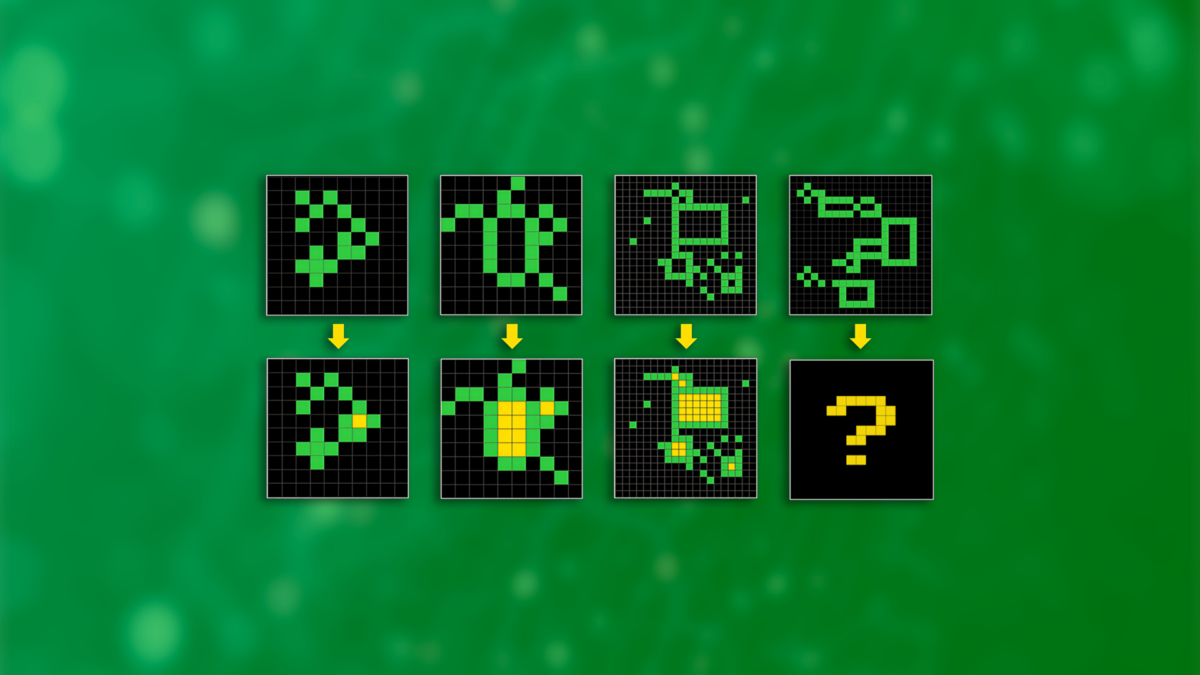
A team from Cornell led by Kevin Ellis, assistant professor of computer science in the Cornell Ann S. Bowers College of Computing and Information Science, has developed a set of AI models that together, solve about 56% of the problems – scoring within 4 percentage points of the average human. Their paper, “Combining Induction and Transduction for Abstract Reasoning,” received a first-place-paper award at the 2024 ARC Prize competition. Lead authors on the paper were Wen-Ding Li, a doctoral student in the field of computer science, and Keya Hu, a visiting undergraduate student in Ellis’ group.

Via:
AI, quantum drive discovery of peptides for microplastic cleanup
January 21, 2025
A research team led by Cornell has demonstrated how quantum computing and artificial intelligence can be used to design new peptides capable of capturing microplastics that pose serious risks to ecosystems and human health.

Via:
How Academe Can Compete in the AI Arms Race by Kavita Bala
January 7, 2025
We are living in the most consequential decade in artificial intelligence’s history. We don’t know exactly what the future will look like, and we don’t know exactly what innovations it will bring, but we know one thing for certain: AI will be shaped by the people who have access to the most computing power and data.
Via:
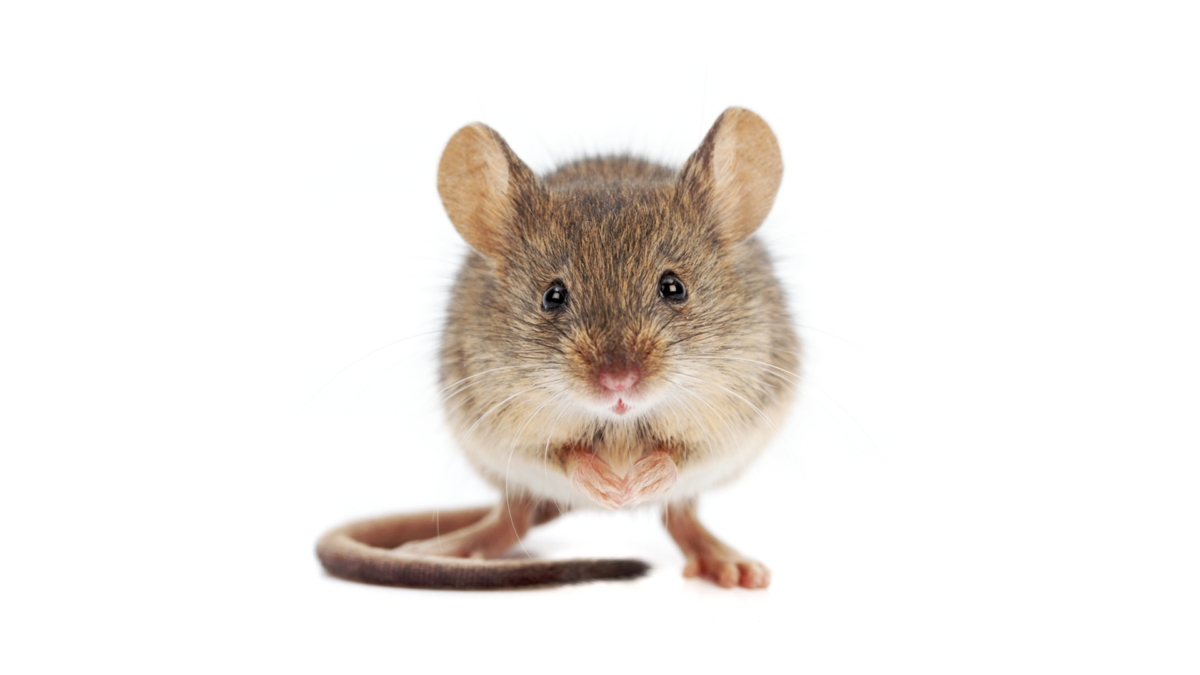
Mice use their tongues to ‘see’ tactile targets
January 7, 2025
Cornell scientists have identified the neural pathway mice use to direct the tongue to tactile targets: the superior colliculus, the same brain region that primates – including humans – use to direct their gaze to visual targets. It’s likely that humans use the same neural pathways for touch-guided tongue control.
Via:
Pupil size in sleep reveals how memories are sorted and preserved
January 2, 2025
By studying mice equipped with brain electrodes and tiny eye-tracking cameras, Cornell researchers determined that new memories are being replayed and consolidated when the pupil is contracted during a substage of non-REM sleep.