
Latest stories, updates, and announcements that highlight the people, research, and progress of AI throughout Cornell.
Want your news listed here? Email us.
AI Headlines from Around the University

Via:
What’s old is new: customizable system for sustainable cooling
December 16, 2025
Evaporative cooling is far from new – it has been used to cool living spaces and drinking water for centuries – but the Matter of Tech Lab at Cornell Tech has come up with a new way to deploy an old idea.

Via:
New 3D benchmark leaves AI in knots
December 16, 2025
In new research that puts the latest models to test in a 3D environment, Cornell scholars found that AI fares well with untangling basic knots but can’t quite tie knots from simple loops nor convert one knot to another.

Via:
From Greener AI to Richer 3D Worlds: 23 Papers Debuted at NeurIPS Conference
December 12, 2025
Cornell Tech faculty made a strong showing at the 2025 Conference on Neural Information Processing Systems (NeurIPS), held Dec. 2–7 in San Diego, presenting 23 research papers at one of the world’s premier gatherings for artificial intelligence and machine learning.

Via:
AI chatbots can effectively sway voters – in either direction
December 4, 2025
A short interaction with a chatbot can meaningfully shift a voter’s opinion about a presidential candidate or proposed policy in either direction, new Cornell research finds.

Via:
Grants to support research at nexus of AI, climate science
December 1, 2025
As energy use associated with artificial intelligence climbs and sustainability challenges intensify, research is needed to make AI systems more efficient and more effective for environmental research.
The 2030 Project: A Cornell Climate Initiative, the Cornell AI Initiative and the Cornell Atkinson Center for Sustainability have announced an inaugural round of grant funding to support research at the intersection of AI and climate science.

Via:
Cornell Tech Launches Pre-College Summer Innovation Intensives for Future Tech Leaders
December 1, 2025
Cornell Tech will introduce its first Summer Innovation Intensives program in July 2026, offering pre-college students an immersive experience in artificial intelligence, ethics, and entrepreneurship. The three-week program, scheduled for July 13-30 on Cornell Tech’s Roosevelt Island campus, is designed to give students a head start on college-level learning while tackling real-world challenges through technology. Students who are at least 15 years old and have completed their sophomore year of high school by the program start date are encouraged to apply.
Via:
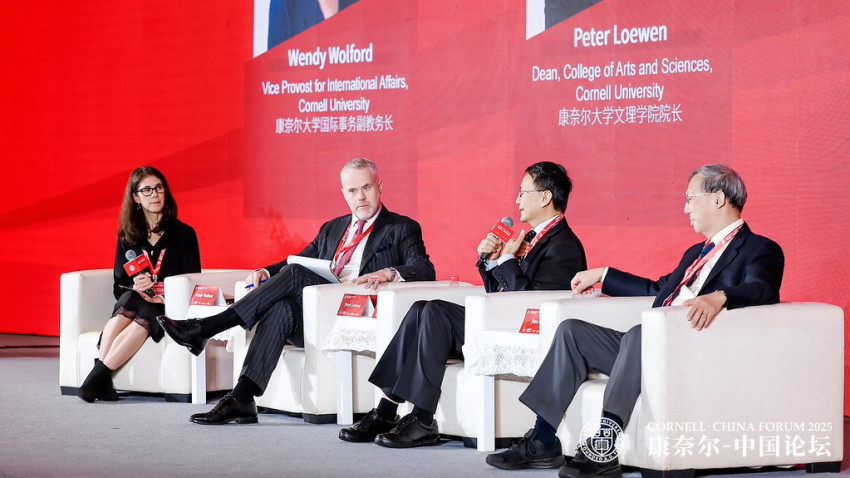
University leaders, alumni meet at annual forum in Shanghai
November 21, 2025
Cornell leaders traveled across China and Asia in early November to connect with alumni, deepen partnerships, celebrate academic milestones, and engage in discussions on a wide range of global challenges. The multistop trip included the sixth annual Cornell-China Forum in Shanghai.
Via:
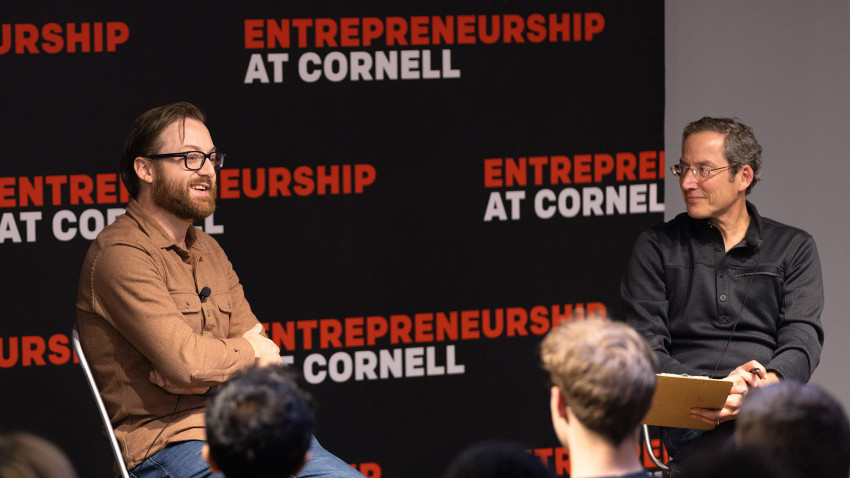
Anduril CEO offers inside look at defense industry dynamo
November 19, 2025
Anduril has 15 business lines creating everything from surveillance and attack drones to autonomous fighter jets and sensors to go into space.

Via:
Celebrating the 50th Startup Cornell podcast at Eclectic Convergence
November 14, 2025
This episode features speakers and attendees recorded live during the Oct. 31 conference at Cornell Tech in New York City.