
Latest stories, updates, and announcements that highlight the people, research, and progress of AI throughout Cornell.
Want your news listed here? Email us.
AI Headlines from Around the University

Via:
Cornell Tech partners with Mastercard to advance AI governance standards
March 25, 2026
Cornell Tech has launched a research collaboration with Mastercard to advance methods for evaluating and auditing generative artificial intelligence systems.

Via:
CAROW Announces AI and Work Grant Recipients
March 20, 2026
The ILR School’s Center for Applied Research on Work (CAROW) recently awarded three seed grants for new research that addresses questions around the intersection of AI and organizations, employment and work.

Via:
AI tools show promise for diagnosing advanced heart failure
March 20, 2026
The study offers the prospect of better care for many thousands of patients who may be overlooked due to the difficulty of diagnosing their condition.
Via:
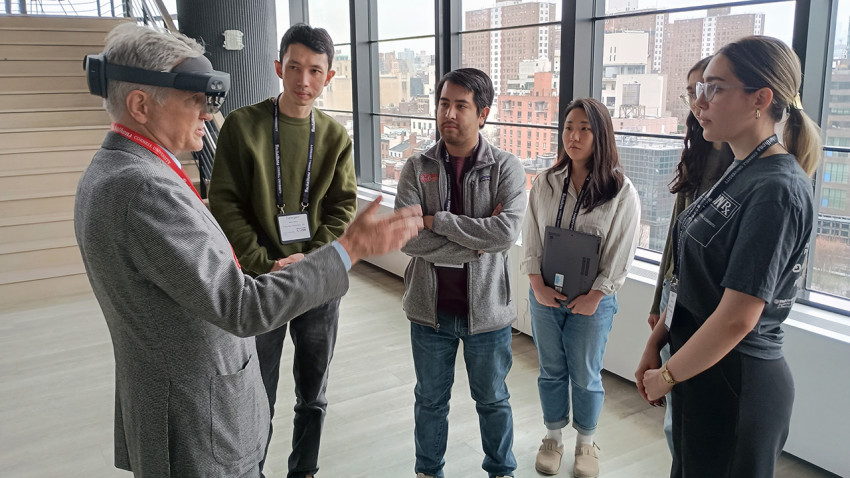
Students pitch AI-inspired solutions at Cornell Health Hackathon
March 20, 2026
More than 100 students from across Cornell campuses and 17 other universities gathered March 6-8 in New York City for an AI hackathon.

Via:
AI assistants can sway writers’ attitudes, even when they’re watching for bias
March 11, 2026
Cornell Tech researchers found that writers who used biased AI auto-suggestions saw their views gravitate toward the AI’s positions without their realizing it — even when they were made aware of the biased AI.

Via:
Testing large language models on scientific literature
March 10, 2026
Cornell physicists and Google researchers engaged a panel of 12 human experts to test the ability of six LLM systems to understand scientific literature at the level of a specialist.
Via:
Winning digital ag idea targets killer ants
March 4, 2026
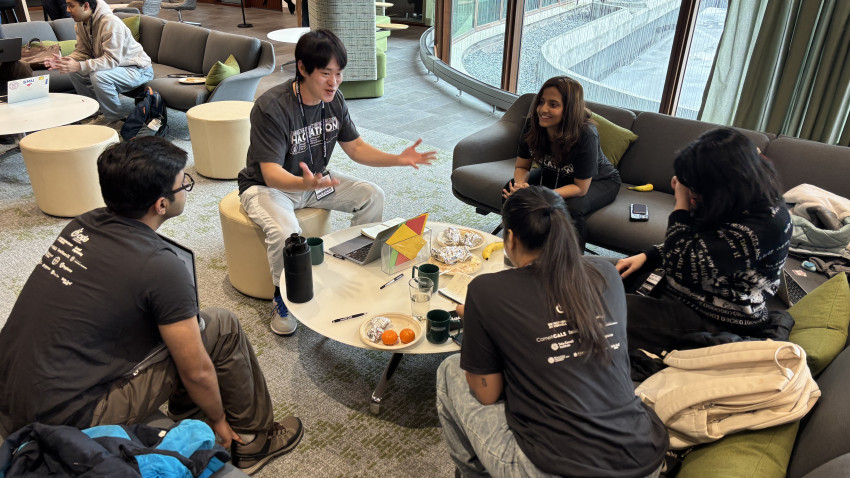
The Digital Ag hackathon, sponsored by the Cornell Institute for Digital Agriculture and powered by Entrepreneurship at Cornell, brought 116 students to Atkinson Hall for the weekend of Feb. 27-March 1.
Via:
Are mental health apps like doctors, yogis, drugs or supplements?
March 3, 2026
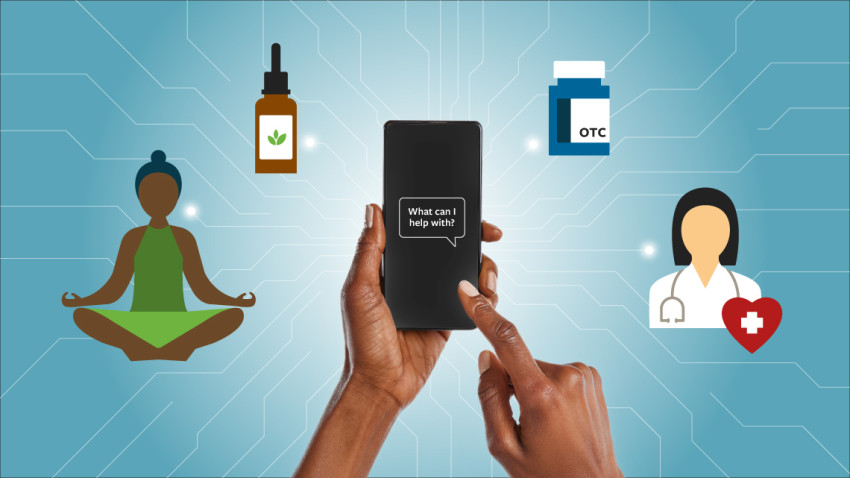
Cornell researchers are recommending new guidelines for developing safe and responsible large language model-based mental well-being apps by consulting relevant experts and reviewing existing state and federal regulations.
Via:
Experts to examine the use of generative AI in science
March 2, 2026
The Assessing and Imagining the Impact of Generative AI on Science Symposium, March 3-5, will feature experts from across academia and industry engaging in discussions on the use and implications of generative AI.