• Alignment and Artificial General Intelligence

    Goldwin Smith Hall 132

    A Humanities Lab roundtable with Nina Beguš (Berkeley), Laurent Dubreuil (Cornell), and W. Starr (Cornell), moderated by Jacob Matthews (Cornell). This event is co-sponsored by the Cornell AI Initiative, and the French Studies Program.
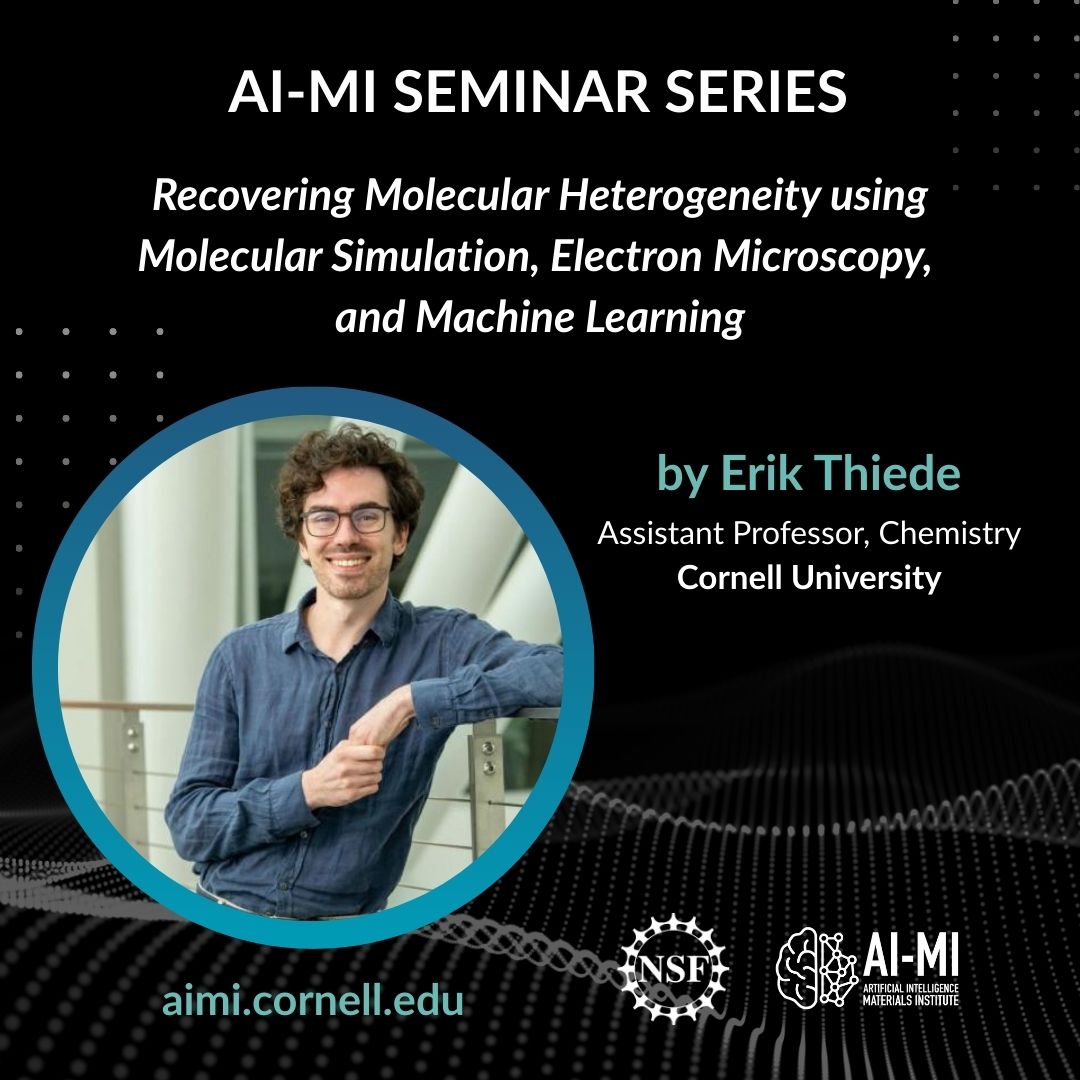
  • Recovering Molecular Heterogeneity using Molecular Simulation, Electron Microscopy, and Machine Learning

    www.youtube.com/@AIMaterialsInstitute

    Join Erik Thiede, Assistant Professor of Chemistry at Cornell, will explore how researchers are combining molecular simulation, machine learning, and electron microscopy to better understand structural heterogeneity in complex chemical systems. The talk will highlight new algorithms that integrate computational models with experimental imaging to uncover hidden states in biomolecules and materials—helping bridge the gap between design and function at the nanoscale.

  • AI-MI Annual Meeting

    Members of the NSF AI Materials Institute will convene for the AI-MI Annual Meeting, a two-day, in-person meeting of the NSF AI Materials Institute community. The meeting will feature research updates across the institute, student and trainee spotlights, focused discussions on shared challenges and opportunities, and dedicated time for networking and collaboration. We welcome faculty, staff and students to connect, align on priorities, and accelerate progress toward AI-enabled materials discovery.

  • AIMI Seminar: Literature-Informed Agents for Drug Discovery

    www.youtube.com/@AIMaterialsInstitute

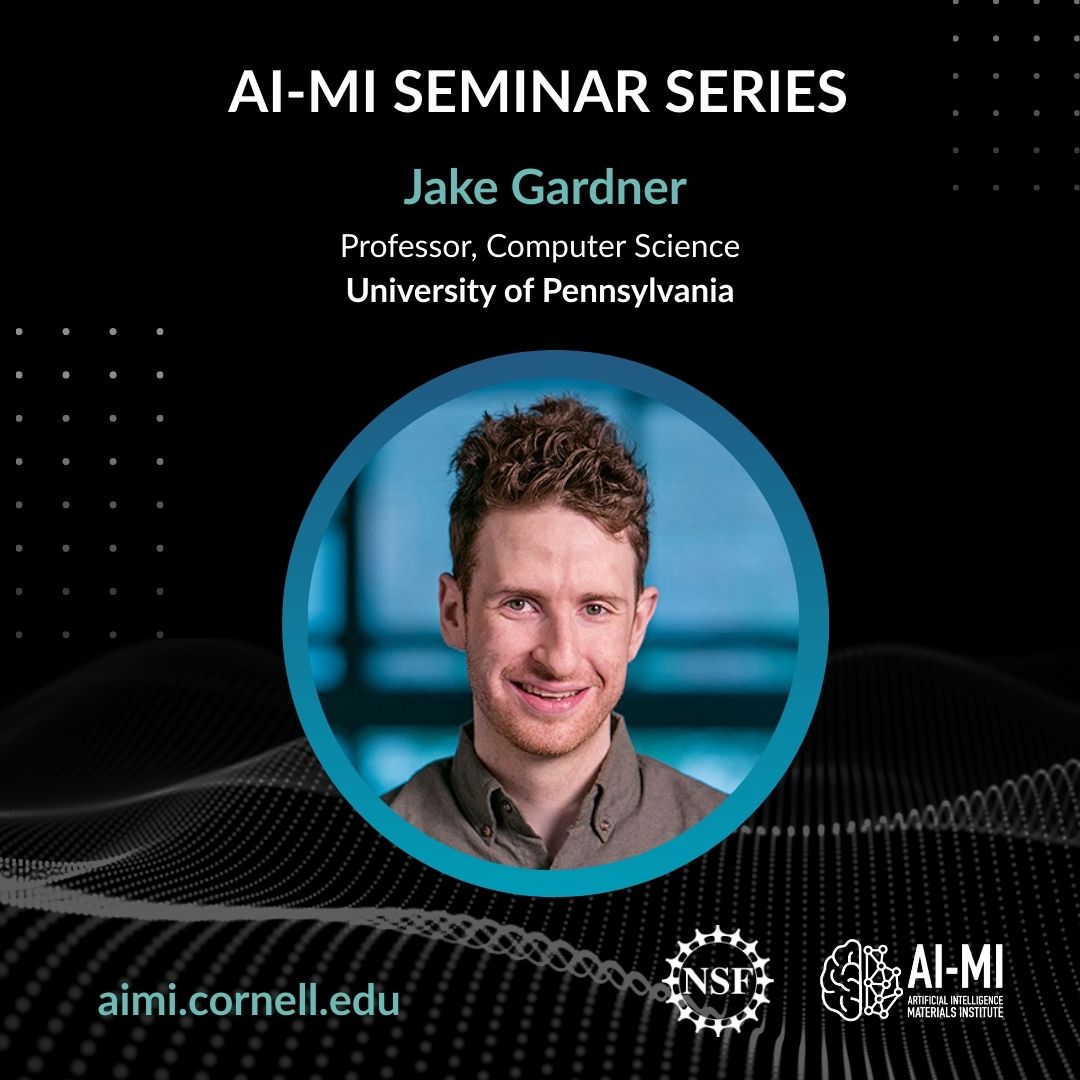
    Join the AI-MI Seminar Series on 03/26 at 3:00 PM ET with Jake Gardner, Assistant Professor at the University of Pennsylvania, for “Literature-Informed Agents for Drug Discovery.”Explore how AI can extract chemical and biological knowledge from scientific literature to build large-scale datasets for molecule and protein design—accelerating drug discovery and AI-driven therapeutic development. Watch live on YouTube: www.youtube.com/@AIMaterialsInstitute

  • A-Why? Undergraduate Perspectives on the AI Disruption

    MVR Room 151

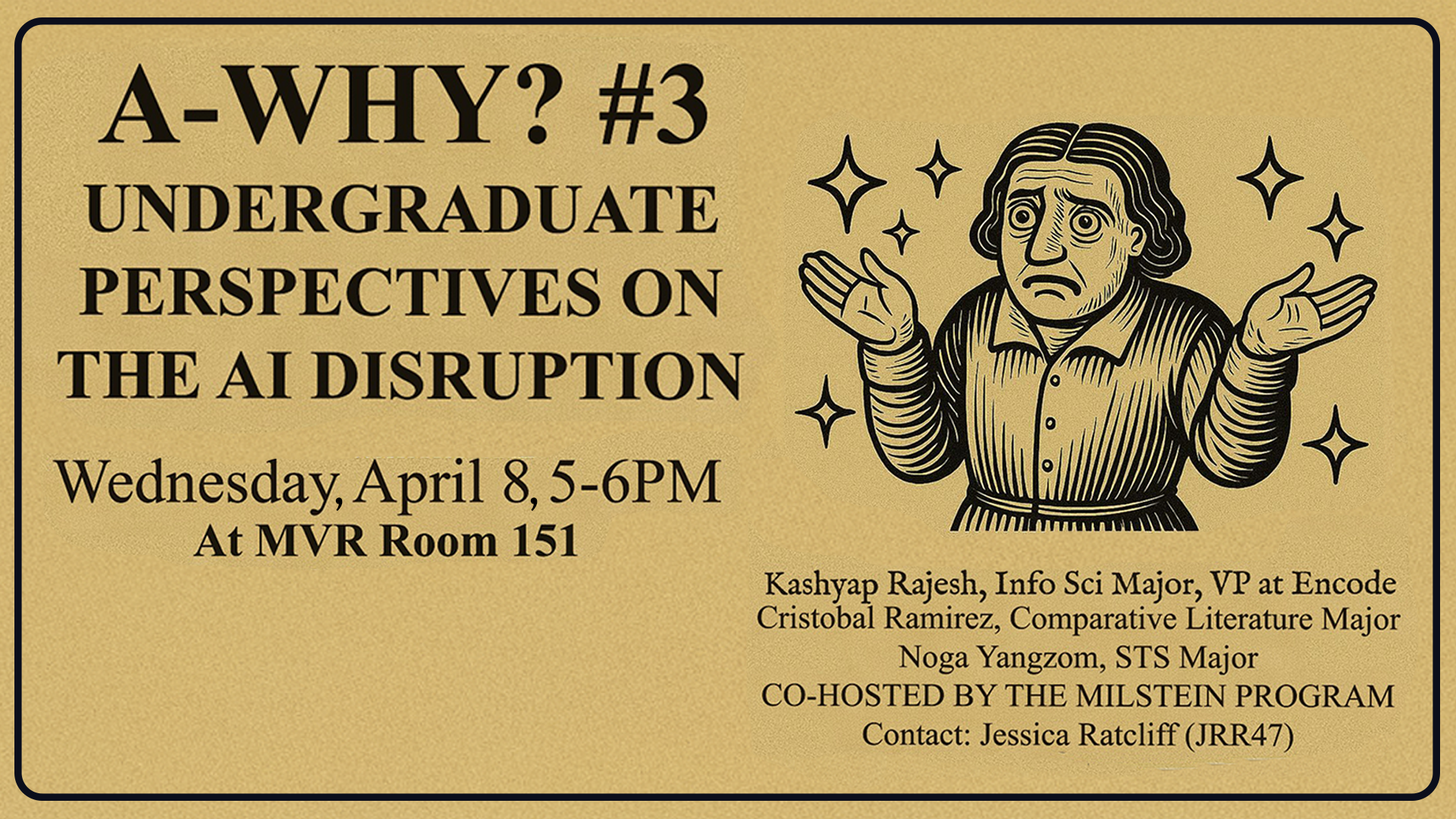
    Undergraduate Perspectives on the AI Disruption. Speakers include Kashyap Rajesh, Info Sci Major, VP at Encode, Youth Fellow at Rithm ProjectCristobal Ramirez, Comparative Literature majorNoga Yangzom, STS MajorPlus students from the Milstein Program

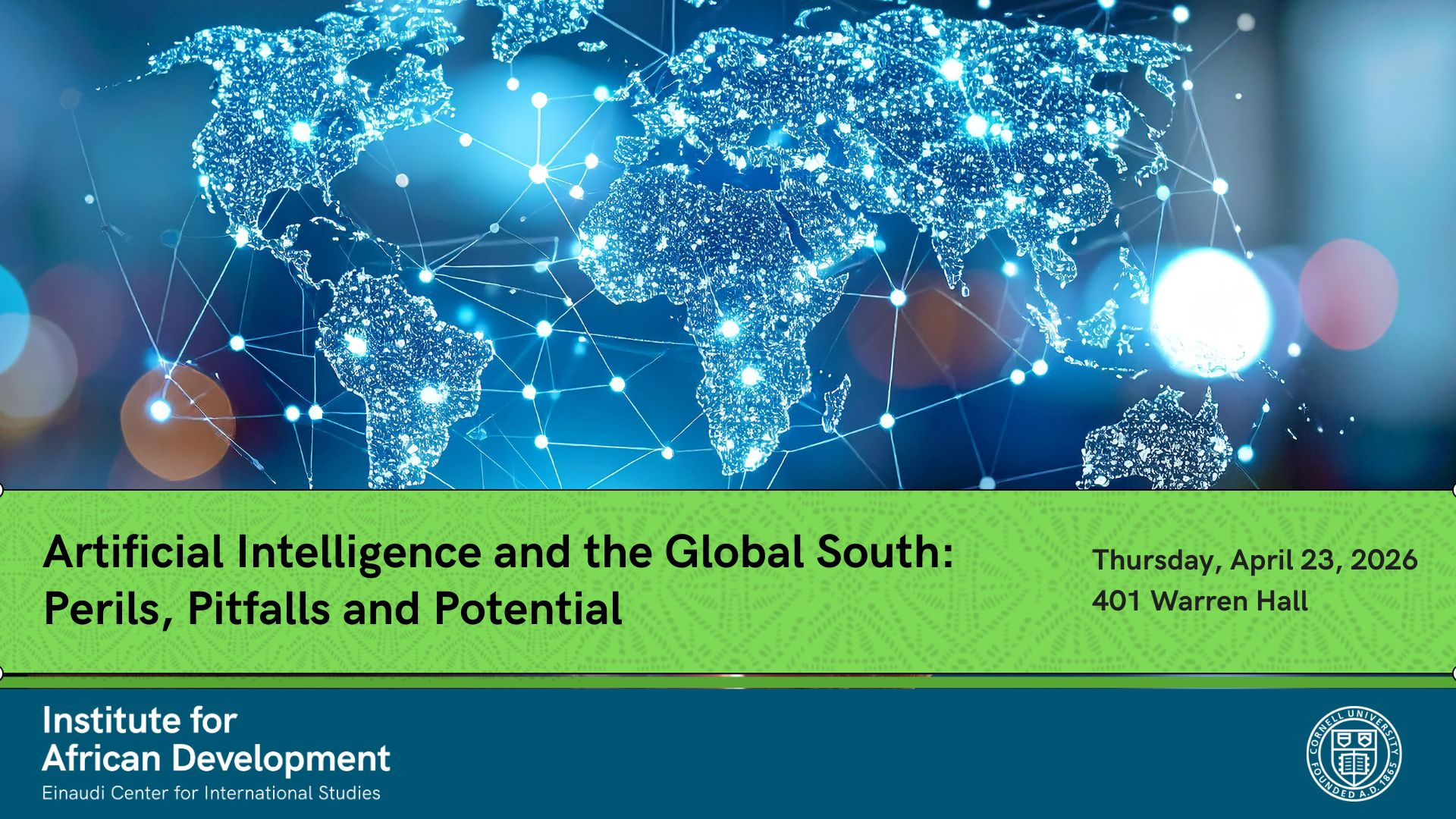
  • Artificial Intelligence and the Global South: Perils, Pitfalls, and Potential

    401 Warren Hall, Cornell University

    What are the specific implications of AI for people living in the Global South? Keynote speakers from a range of disciplines will focus on specific themes. Taking a holistic perspective that considers the historical, socio-cultural, environmental, and political economic context in which AI is embedded in and entangles with the Global South.

  • Jacobs Center AI and ML Workshop Series

    Weill Cornell Medicine

    Join us for an intensive 3-day training workshop exploring cutting-edge topics in precision nutrition and health. Learn how to leverage large biobanks like All of Us and Nutrition for Precision Health to build analysis plans and workflows focused on human microbiome, metabolomics, and digital twins research. Open to faculty, postdocs, trainees, and researchers interested in precision nutrition, computational biology, and data science. Please note that space is limited.

  • Data Science to Build Resilience and Improve Humanitarian Response

    Cornell University, Ithaca, N.Y. Ithaca, New York

    By connecting philanthropies and the private sector with Cornell expertise across computer, information, natural and social sciences, the summit aims to spark new research, collaborations, and funding pathways that bring cutting-edge data tools into real-world humanitarian decision-making.

  • Community-Centered AI

    Cornell University, Ithaca, N.Y. Ithaca, New York

    Bringing together researchers, practitioners, and community members, the three-day convening will tackle AI's core problem – its massive carbon footprint, displacement of local expertise, and violations of community consent – through collaborative workshops, participatory algorithm auditing, and solution-generating discussions.