
At Cornell, AI is both a subject of inquiry — ranging from algorithms and machine learning to ethics and human-AI interaction — and a tool that advances scientific breakthroughs.
Advancing AI Research
AI research at Cornell is deeply interdisciplinary, bringing together technical innovation and human‑centered insight. Across campuses, colleges, and disciplines, researchers advance the foundations of AI while exploring its applications, ethics, and societal impact. This collaborative approach drives breakthroughs that shape the future of AI and examine how these technologies can be developed and applied responsibly to address real‑world challenges.
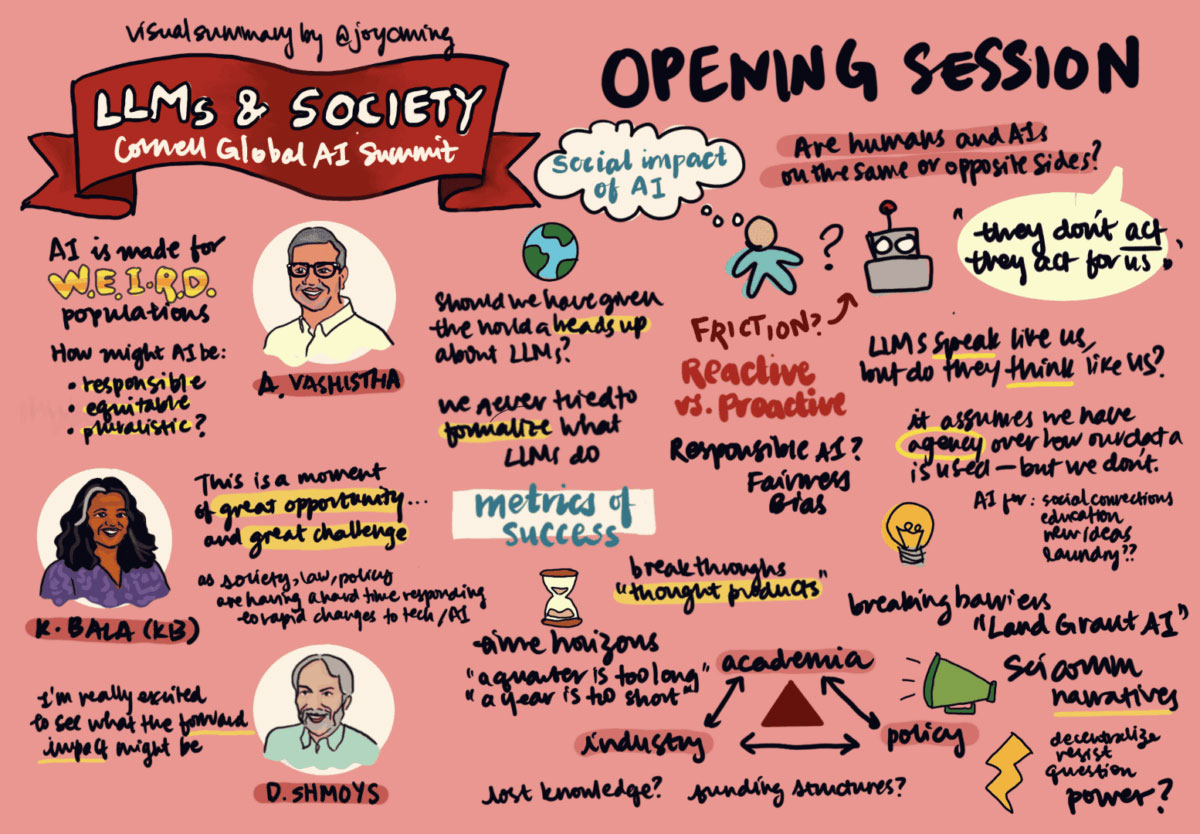
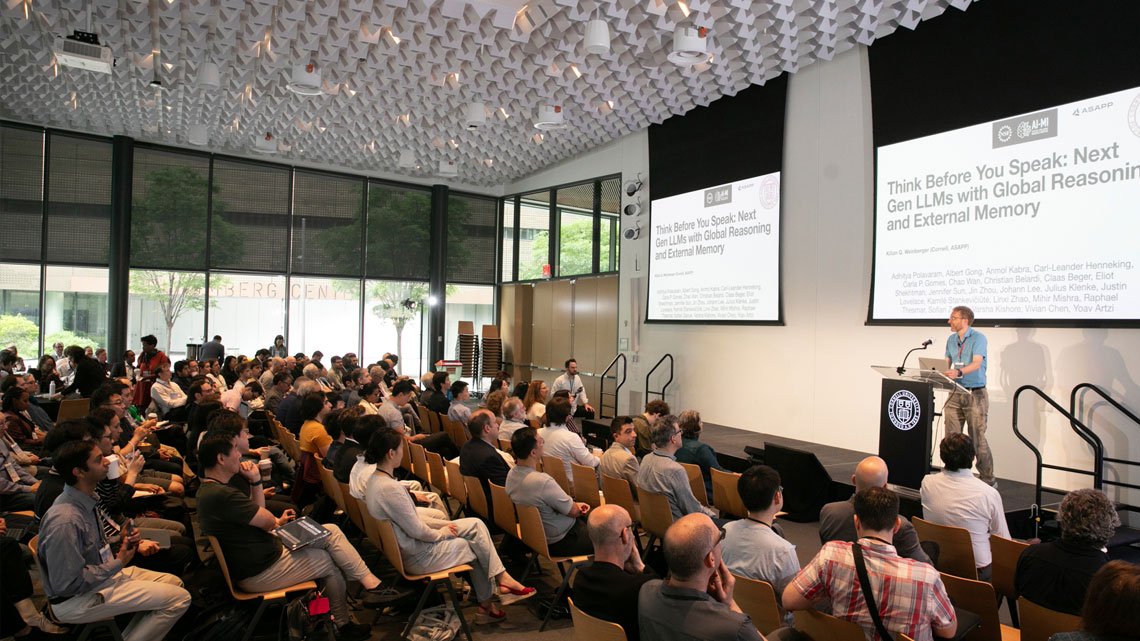
Cornell Thought Summits are dynamic forums that bring together leaders and innovators to spark innovative collaborations in Data Science and AI.
We explore bold ideas, identify emerging research frontiers, and lay the groundwork for transformative, multi-institutional partnerships.
Powering New Discoveries
Cornell researchers are developing and using AI to accelerate discoveries and enable new approaches in sustainable agriculture, nutrition, materials science, precision medicine, and other fields where complex challenges require advanced analytical and predictive tools. Interdisciplinary collaboration is central to exploring AI for scientific discovery, and the initiative fosters cross‑campus partnerships that bring together diverse expertise.

Guidelines and Policies
AI introduces significant opportunities for research advancement, offering new analytical and predictive capabilities that can accelerate discovery across disciplines. It also presents challenges for research integrity and rigor. Cornell supports researchers in exploring these tools responsibly, recognizing that faculty expertise and experimentation are central to developing sound research methodologies.
Generative AI in Academic Research: Perspectives and Cultural Norms
The report provides guidance for thoughtful use of Generative AI in research, identifying opportunities as well as risks and duties in both the development and use of these tools in academic research that aspires to positive societal impact.
Read the full Committee Report: Web: Generative AI in Academic Research: Perspectives and Cultural Norms(external site)
Compliance Guidance for AI Use in Research
Although AI is a new field, compliance questions are mostly covered by existing Cornell policies.
View relevant Cornell policies and guidance for AI as it is developed.
Tools and Resources
Cornell is committed to serving as a model for responsible, future‑focused leadership in higher education and beyond. Learn more about the tools and resources that help our community explore, experiment, and use AI responsibly in teaching, research, and daily work.
Compute Resources
Cornell supports the coordination of research infrastructure, including computing resources and policy frameworks, to advance responsible, high‑impact AI research. By using AI as a catalyst for innovation, Cornell empowers researchers to make breakthroughs that benefit science, society, and the world.
Center for Advanced Computing
The Center for Advanced Computing provides a broad range of services that support the computational research needs of Cornell faculty. The Center’s role is to enable and empower research capabilities and help Cornell’s scientists, researchers, and scholars achieve new and innovative breakthrough research.
Scientific Computing Unit (SCU)
The SCU provides high performance scientific computing to researchers at Weill Cornell Medicine through cutting-edge computational resources, fast on-premises storage, software deployment, and development consulting.
Empire AI
Cornell is a founding member of Empire AI, a consortium of 10 New York state institutions organized to promote responsible research and development, create jobs, and unlock AI opportunities focused on public good. With more than $400 million in public and private investment, Empire AI aims to give researchers, public organizations, and small companies the opportunity to develop AI tools for non-corporate-focused interests in New York.
The consortium created a shared AI computing facility in upstate New York, where Cornell and partners can leverage state-of-the-art computing power to help shape the future of AI.
If you are a faculty member interested in computing resources through Empire AI, please contact empire-ai@cornell.edu.

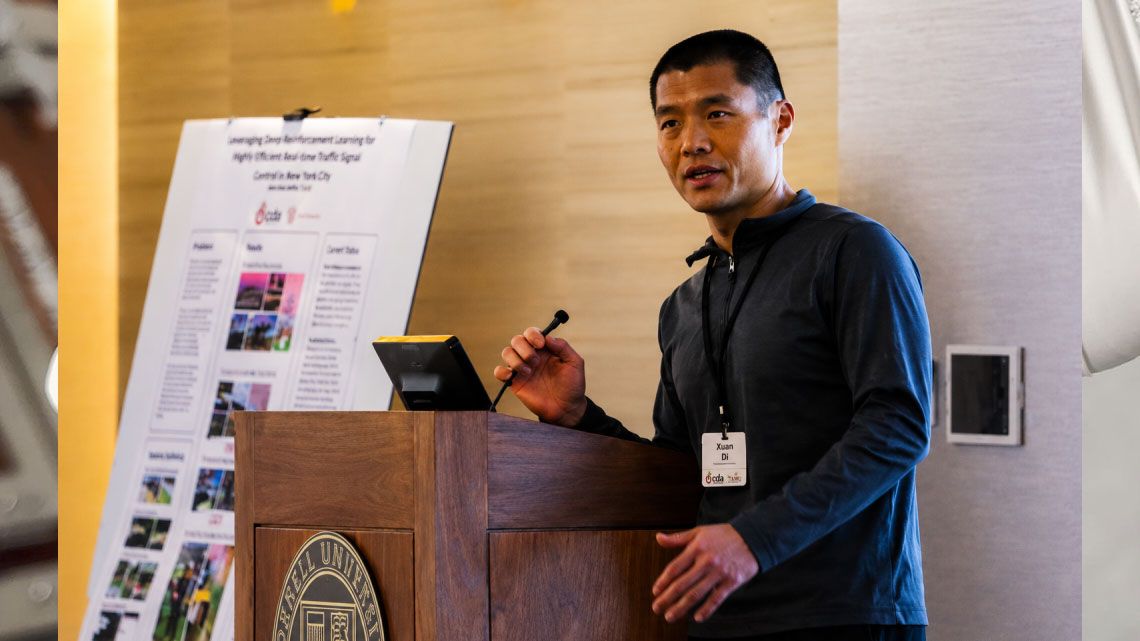
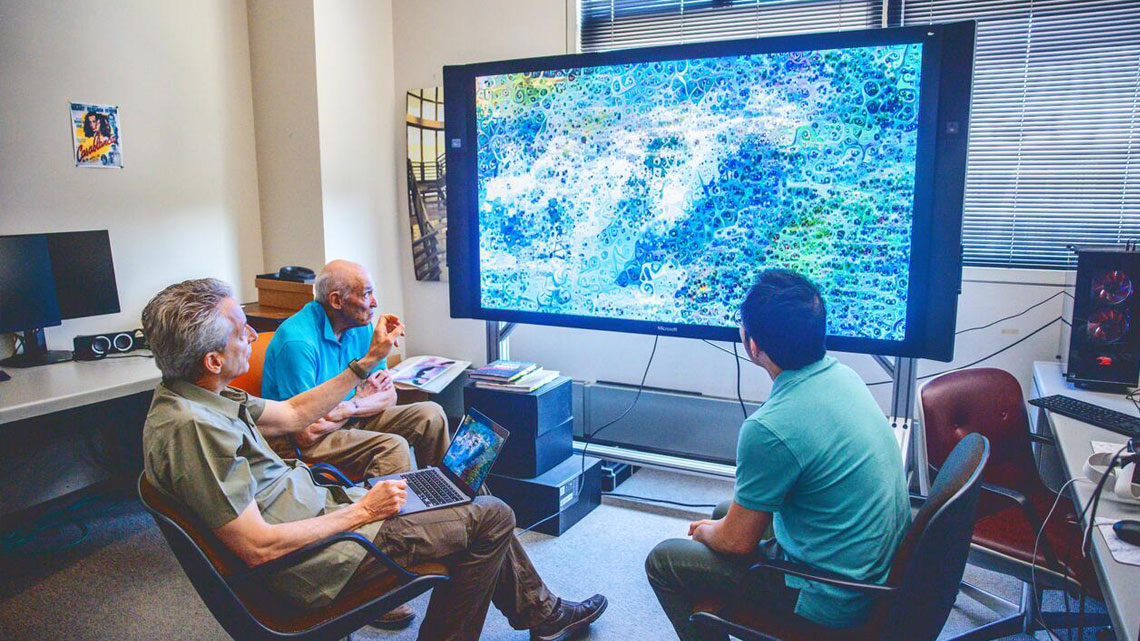
Empire AI Project: Accelerating Materials Discovery with AI-Powered Electron Microscopy Analysis
Fengqi You, Cornell Duffield Engineering
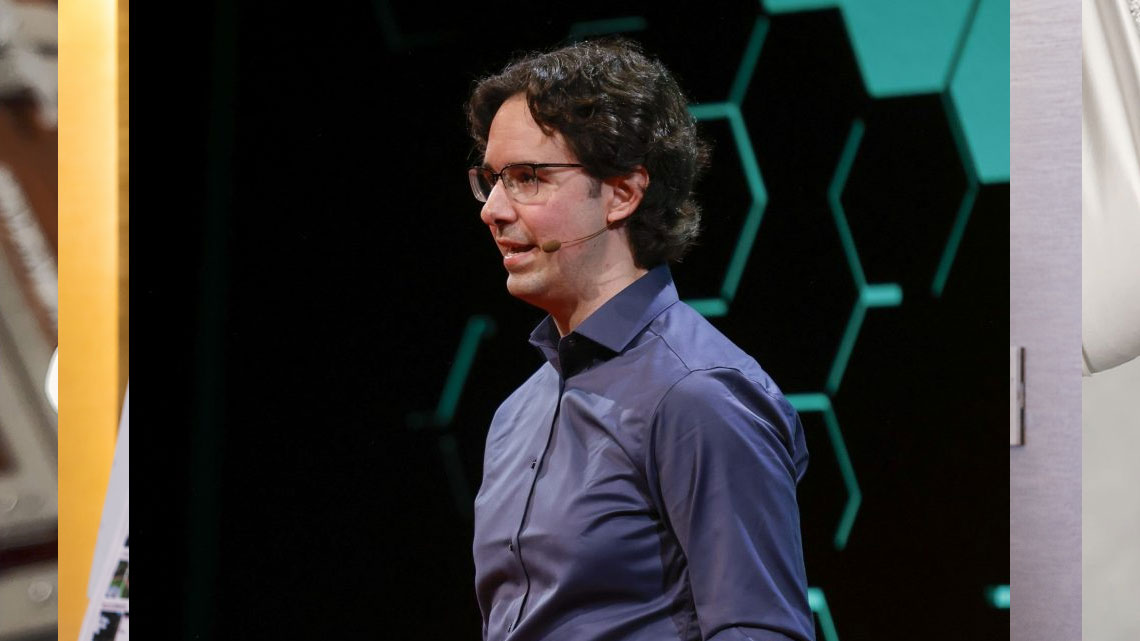
Empire AI Project: AI for Music Composition
John Thickstun, Cornell Bowers
Strategic Partnerships
Cornell advances its AI mission through strategic partnerships with industry and philanthropy that provide resources, real‑world insights, and opportunities for shared impact. These collaborations strengthen research and education, help communicate Cornell’s vision for responsible, human‑centered AI, and give partners early access to cross‑disciplinary innovation. They also support student pathways through internships, fellowships, and project opportunities, while expanding public visibility through joint events and publications.
$10.5M gift to Cornell will fund research using Empire AI
A five-year, $10.5 million gift from philanthropist Tom Secunda, co-founder of Bloomberg L.P., will help fund artificial intelligence-related research at Cornell Tech in New York City and at the Cornell Ann S. Bowers College of Computing and Information Science in Ithaca.
$10M gift to Cornell Bowers supports AI advancement
A $10 million gift from Josh Kulkin ’01 to the Cornell Ann S. Bowers College of Computing and Information Sciences will bolster the university’s position as a world leader in foundational artificial intelligence research.
Internal Funding Opportunities
Discover internal funding opportunities that advance AI research and collaboration across Cornell.

Cornell Atkinson Center for Sustainability
The Cornell Atkinson Center for Sustainability provides both short- and long-term funding, often in partnership with other organizations, for novel and sometimes high-risk, high-reward research.

Office of the Vice Provost for Research
Several Cornell entities have funding opportunities for which individuals at Cornell can apply. The Office of the Vice Provost for Research provides summaries of many of these opportunities.
AI + Society Seed Grants
Grants examine social, cultural, and economic implications of AI, and advance human-centered, socially responsible approaches to its development and use.

Thought Summits
A Cornell forum aimed at identifying and developing inter- and intra- institutional collaborations in the novel areas of Data Science and Artificial Intelligence. All Cornell University faculty are invited to apply.
Working on a large-scale, multi-PI, or cross-disciplinary AI project?
Join our office hours Thursdays at 10 a.m. ET to share your ideas and explore how the Cornell AI Initiative can support you — from connecting collaborators and shaping teams to research development and proposal strategy. For more information, contact Research Development Director, Jovana Savanovic.