
The work is paving the way for hybrid optical-electronic systems that could reduce the energy and computational resources required for AI-driven image analysis and other visual inference tasks.

News Category
News
The work is paving the way for hybrid optical-electronic systems that could reduce the energy and computational resources required for AI-driven image analysis and other visual inference tasks.

Steven Strogatz, a Cornell University mathematics professor, discusses the impact of artificial intelligence on mathematicians’ sense of purpose.
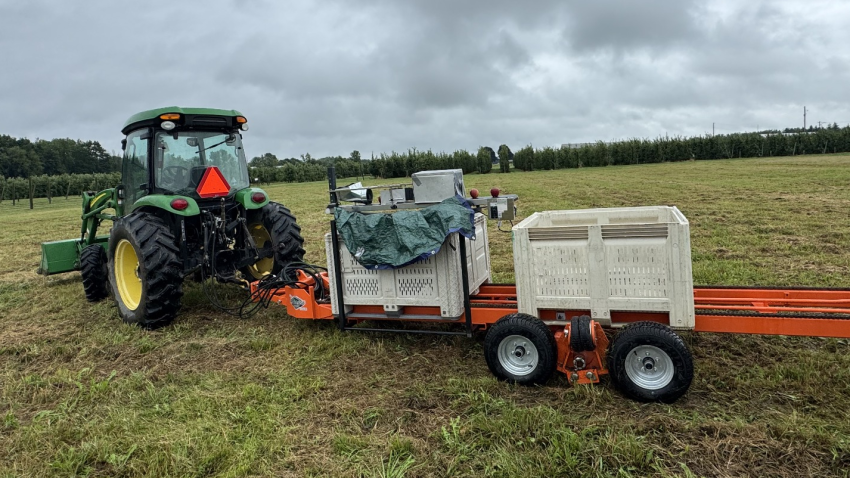
Ficio, a startup founded by Youhanna Meleka, M.Eng. ’26, is developing an AI platform for the food supply chain that can run on different machines and tackle very different jobs – from sorting apples in an orchard to turning potatoes into french fries.
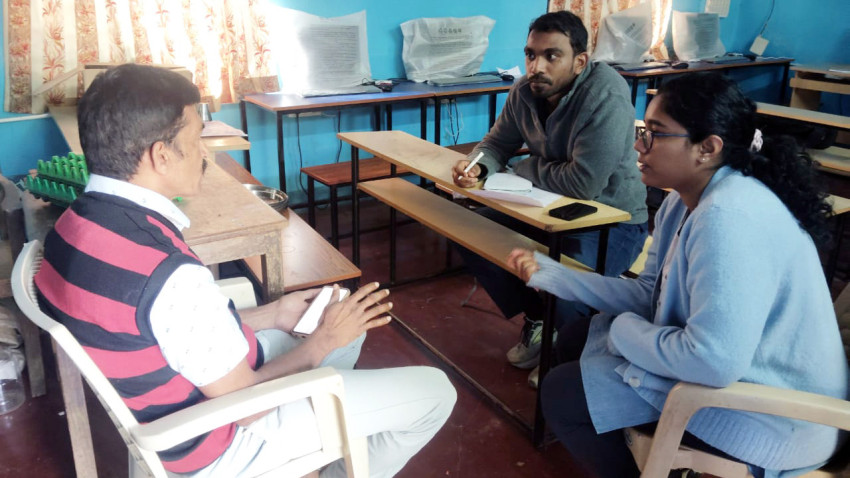
Overworked teachers in southern India have a new tool, developed by Cornell researchers, for educating their students: Shiksha Copilot, an AI system that generates culturally relevant lesson plans for schools with few resources.

As mathematicians work through challenges related to AI, Cornell math faculty members are leading the field with work integrating AI into math and mathematics into AI.
The Dean’s AI to Advance Medicine Initiative Fellowship Program, or FAIMI, supports early-career faculty pursuing innovative artificial intelligence projects with the potential to advance biomedical research, clinical care, healthcare delivery, and biomedical education.

Sarah Kreps, professor and director of Cornell University’s Tech Policy Institute, discusses the complexities of regulating artificial intelligence for minors compared to social media.

Cornell is expanding its expertise in artificial intelligence and data science thanks to the arrival of new faculty, with support from the Radical Collaboration initiative, building a research community that reaches across disciplines.