
Empire AI, a $400 million effort to create a shared academic research computing facility, is set to advance dozens of ambitious, cross-disciplinary projects at Cornell.

News Category
Autonomous Systems
Empire AI, a $400 million effort to create a shared academic research computing facility, is set to advance dozens of ambitious, cross-disciplinary projects at Cornell.

Beginning Fall 2024, Cornell undergraduates can minor in artificial intelligence (AI).

Cornell researchers have developed two technologies that track a person’s gaze and facial expressions through sonar-like sensing.
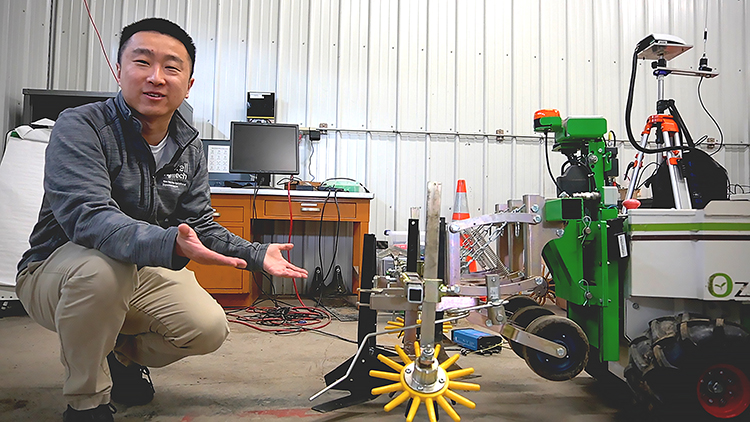
Yu Jiang is taking ag research to the next level. From robots to drones to AI, Yu is developing many exciting solutions for the New York farm industry.

Feline-centric chatbot connects cat owners with credible, science-based information in a novel way. Users can ask the chatbot questions, get to the answers quickly and ask follow-up questions – or even play games.

Thorsten Joachims talks with CNET about the future of AI

Convening of 80 leaders, researchers and staff across six colleges discussed strategies to address climate change mitigation, adaptation and societal transformation, in a Feb. 1 roundtable sponsored by The 2030 Project.

Cornell’s participation in the U.S. Commerce Department initiative will help advance development and deployment of safe and trustworthy artificial intelligence technology.