
Artificial intelligence-powered writing assistants that autocomplete sentences or offer “smart replies” not only put words into people’s mouths, they also put ideas into their heads, according to new research.

News Category
Scientific Discovery
Artificial intelligence-powered writing assistants that autocomplete sentences or offer “smart replies” not only put words into people’s mouths, they also put ideas into their heads, according to new research.

People have more efficient conversations, use more positive language and perceive each other more positively when using an artificial intelligence-enabled chat tool, a group of Cornell researchers has found.

Hospitals have begun using “decision support tools” powered by artificial intelligence that can diagnose disease, suggest treatment or predict a surgery’s outcome.
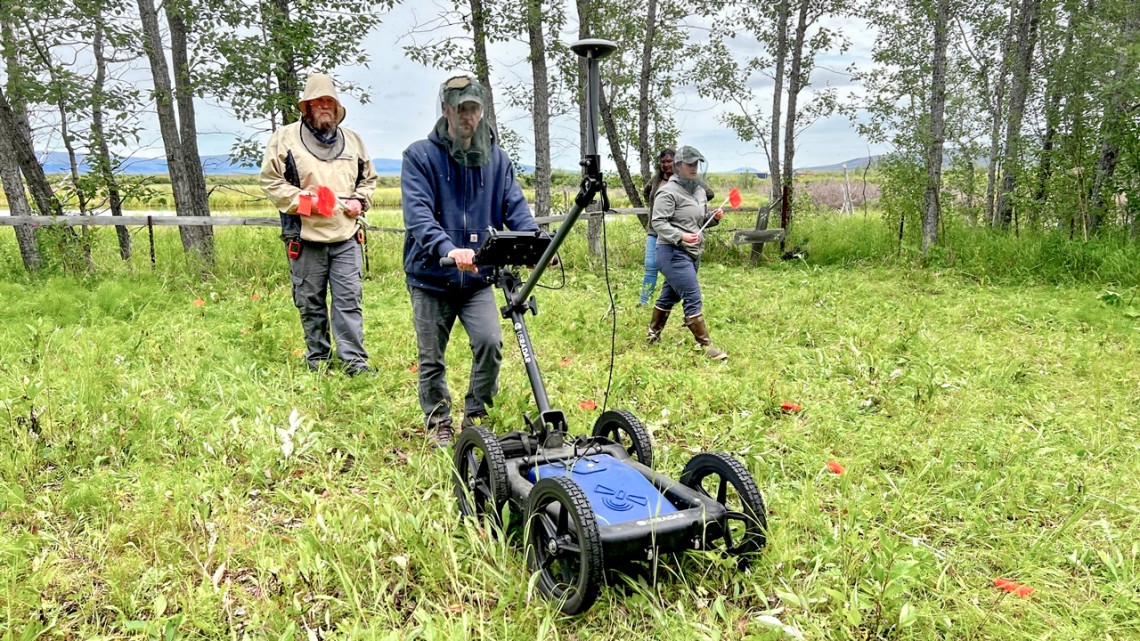
A Cornell research scientist used ground-penetrating radar and AI modeling to locate the communal graves of approximately 93 victims of the Spanish influenza at Pilgrim Hot Springs in Alaska.

Ten Cornell postdoctoral researchers who plan to harness the power of artificial intelligence (AI) in areas like materials discovery, physics, biological sciences and sustainability sciences have been named Eric and Wendy Schmidt AI in Science Postdoctoral Fellows, a Sc…

Using artificial intelligence, Cornell engineers have simplified models that accurately gauge the fine particulate matter in urban air pollution – exhaust from cars and trucks that get into human lungs.
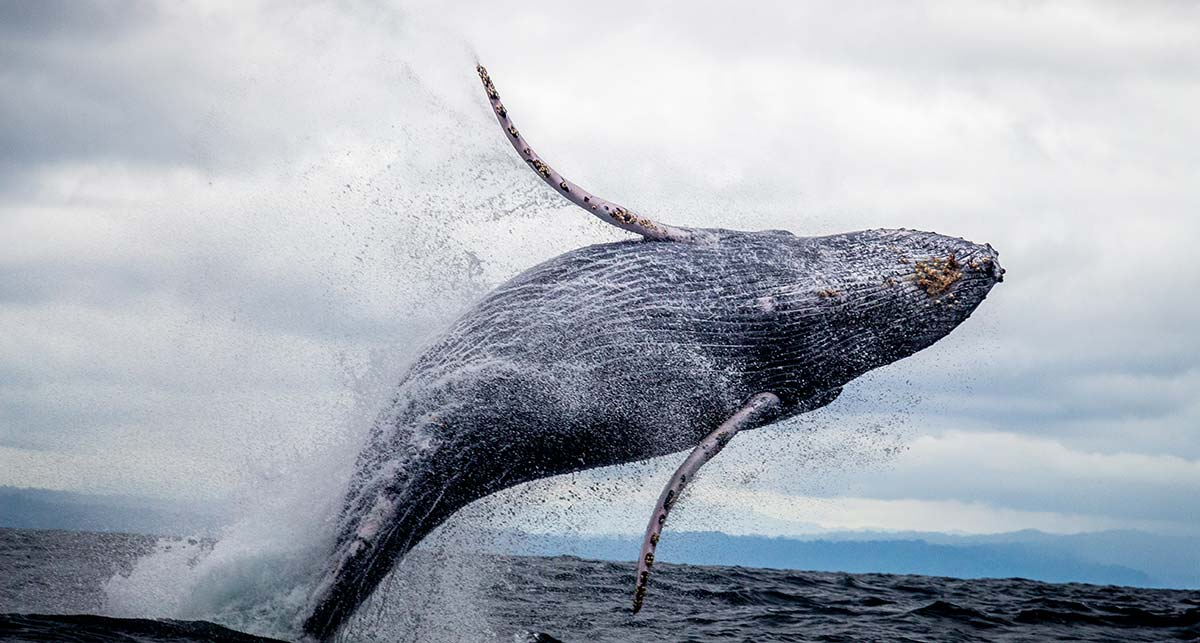
A new study demonstrates for the first time that the same undersea fiber-optic cables used for internet and cable television can be repurposed to tune in to marine life at unprecedented scales, potentially transforming critical conservation efforts.

A combination of ecological field methods and AI has helped an interdisciplinary research group detect eelgrass wasting disease from San Diego to southern Alaska, and determine that it’s caused by warmer-than-normal water temperatures.