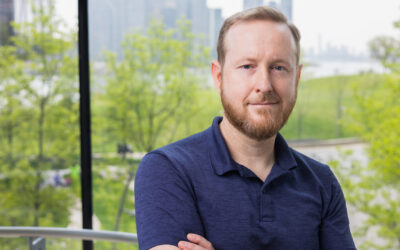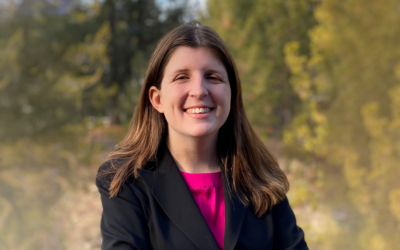
Polymath scholar Sendhil Mullainathan ’93, a behavioral economist who has combined computational and social sciences to produce pioneering work on health care, poverty and the criminal justice system, will deliver three public lectures at Cornell Nov. 11-13 for the Messenger Lectures series.
Cornell AI News
News Category
Filter by Topic
Rising star Ben Laufer: Improving accountability and trustworthiness in AI
With artificial intelligence increasingly integrated into our daily lives, one of the most pressing concerns about this emerging technology is ensuring that the new innovations being developed consider their impact on individuals from different backgrounds and communities. The work of researchers like Cornell Tech PhD student Ben Laufer is critical for understanding the social and ethical implications of algorithmic decision-making.

Leading the charge in cybersecurity, trust, and safety
In an era where digital threats are ever-evolving, the need for advanced education and research in cybersecurity, trust, and safety is paramount. Cornell Tech’s new Security, Trust, and Safety (SETS) Initiative, a cutting-edge program aimed at revolutionizing these fields, aims to address these challenges head-on. The director of the SETS program, Google alum Alexios Mantzarlis, brings a wealth of experience and a vision to this critical endeavor.
Thomas Ristenpart honored with “Test of Time” award
Thomas Ristenpart, a Professor at Cornell Tech and in the Computer Science Department at Cornell University, received the esteemed Test of Time Award at the 33rd USENIX Security Symposium. This accolade recognizes his co-authored 2014 paper, “Privacy in Pharmacogenetics: An End-to-End Case Study of Personalized Warfarin Dosing,” for its enduring impact on the field over the past 10 years.
Considering race in colon cancer prediction reduces disparities
Taking race into account when developing tools to predict a patient’s risk of colorectal cancer leads to more accurate predictions when compared with race-blind algorithms, researchers find.
While many medical researchers have argued that race should be removed as a factor from clinical algorithms that predict disease risks, a new study finds that, at least for colorectal cancer, including race can help correct a data issue – inaccurate recording of family history for Black patients.
AI-generated college admissions essays sound male, privileged
In an examination of thousands of human-written college admissions essays and those generated by AI, researchers found that the AI-generated essays are most similar to essays authored by students who are males, with higher socioeconomic status and higher levels of social privilege.
Global AI among three projects funded to build better future
A multidisciplinary team aims to build a more inclusive AI shaped by global cultures and knowledge – one of three projects that make up Cornell’s new Global Grand Challenge: The Future.
Reducing the cultural bias of AI with one sentence
“Cultural prompting” – asking an AI model to perform a task like someone from another part of the world – resulted in reduced bias in responses for the vast majority of the more than 100 countries tested by a Cornell-led research group.